Last week, DOJ came out with a proposed rule for title II entities with respect to mobile apps and their Internet sites, here. Certainly big news, so we are going to talk about it. As usual, the blog entry is divided into categories and they are: purpose of proposed rule, need for the rule, and benefits of the rule; the text of the proposed rule; and 60+ questions. Please note that my thoughts/takeaways/questions appear underneath the applicable section of the proposed rule.


I

Purpose of Proposed Rule, Need for the Rule, and Benefits of the Rule


  1. DOJ since 1996, consistently has taken the viewpoint that title II of the ADA applies to all services, programs, and activities of the public entities, including those provided by the way of the web.
  2. Governmental entities use apps and websites all the time and members of the public frequently access governmental entities through their website and through associated apps in a myriad of different ways. Therefore, it is critical to ensure that people with disabilities can access web content and mobile apps quickly, easily, independently, and equally (the proposed rule contains numerous examples of the ways that people access governmental entities by way of the web and mobile apps).
  3. While many public health mandates addressing Covid-19 are no longer in place, durable changes to State and local governmental entities operations and public preferences necessitating greater access online services, program, and activities remain and are likely to be permanent.
  4. Millions of individuals in the United States have disabilities affecting their use of the web and mobile apps. Many of those individuals use assistive technology, such as speech recognition and screen readers, to enable them to navigate websites or access information contained on those websites.
  5. Voluntary compliance with the web content accessibility guidelines has not resulted in equal access for people with disabilities.
  6. DOJ and other federal agencies have taken enforcement action against public entities regarding the lack of access for people with disabilities to their websites.
  7. Web Content Accessibility Guidelines 2.0 has been consistently used by DOJ as the basis for settlements.
  8. A 2021 study found that 71% of county websites did not conform to Web Content Accessibility Guidelines 2.0 and the remaining 29% only partially conformed to the standards. Given the minimal progress in web accessibility over the last 20 years, DOJ does not expect compliance with Web Content Accessibility Guidelines 2.1 level AA to improve significantly in the absence of a rule.
  9. The rule will foster increased independence, flexibility, and dignity for persons with disabilities when accessing the services, programs, and activities of title II entities electronically.
  10. The rule will foster increased privacy for persons with disabilities when accessing the services, programs, and activities of title II entities electronically.
  11. The rule will reduce frustration experienced by people with disabilities when accessing the services, programs, and activities of title II entities electronically.
  12. The rule will decrease the need for persons with disabilities to rely on others while they attempt to access title II entities by ways of electronic means.
  13. The rule will increase program participation for persons with disabilities.
  14. The rule will increase civic engagement and inclusion.
  15. The rule will increase certainty about what constitutes an accessible website under the ADA and potentially reduce litigation.


II

The Proposed Rule Text (my thoughts//takeaways/questions appear within).

PART 35—NONDISCRIMINATION ON THE BASIS OF DISABILITY IN STATE AND LOCAL GOVERNMENT SERVICES

  1. The authority citation for part 35 continues to read as follows:

Authority: 5 U.S.C. 301; 28 U.S.C. 509, 510; 42 U.S.C. 12134, 12131, and 12205a.

Subpart A—General

  1. Amend § 35.104 by adding definitions for Archived web content, Conventional electronic documents, Mobile applications (apps), Special district government, Total population, WCAG 2.1, and Web content in alphabetical order to read as follows:

Definitions.

* * * * *

Archived web content means web content that—

(1) Is maintained exclusively for reference, research, or recordkeeping;

(2) Is not altered or updated after the date of archiving; and

(3) Is organized and stored in a dedicated area or areas clearly identified as being archived.

* * * * *

Conventional electronic documents means web content or content in mobile apps that is in the following electronic file formats: portable document formats (“PDF”), word processor file formats, presentation file formats, spreadsheet file formats, and database file formats.

* * * * *

Mobile applications (“apps”) means software applications that are downloaded and designed to run on mobile devices, such as smartphones and tablets.

* * * * *

Special district government means a public entity—other than a county, municipality, or township, or independent school district—authorized by State law to provide one function or a limited number of designated functions with sufficient administrative and fiscal autonomy to qualify as a separate government and whose population is not calculated by the United States Census Bureau in the most recent decennial Census or Small Area Income and Poverty Estimates.

* * * * *

Total population means the population estimate for a public entity as calculated by the United States Census Bureau in the most recent decennial Census or, if a public entity is an independent school district, the population estimate as calculated by the United States Census Bureau in the most recent Small Area Income and Poverty Estimates.

* * * * *

WCAG 2.1 means the Web Content Accessibility Guidelines (“WCAG”) 2.1, W3C® Recommendation 05 June 2018, https://www.w3.org/​TR/​2018/​REC-WCAG21-20180605/​ [ https://perma.cc/​UB8A-GG2F]. WCAG 2.1 is incorporated by reference elsewhere in this part (see § 35.200 and 35.202).

Web content means information or sensory experience—including the encoding that defines the content’s structure, presentation, and interactions—that is communicated to the user by a web browser or other software. Examples of web content include text, images, sounds, videos, controls, animations, and conventional electronic documents.

Subpart H—Web and Mobile Accessibility

  1. Add new subpart H to read as follows:

Subpart H—Web and Mobile Accessibility

35.200

Requirements for web and mobile accessibility.

35.201

Exceptions.

35.202

Conforming alternate versions.

35.203

Equivalent facilitation.

35.204

Duties.

35.205–35.209

[Reserved]

Requirements for web and mobile accessibility.

  • A public entity shall ensure that the following are readily accessible to and usable by individuals with disabilities:

(1) Web content that a public entity makes available to members of the public or uses to offer services, programs, or activities to members of the public; and

(2) Mobile apps that a public entity makes available to members of the public or uses to offer services, programs, or activities to members of the public.

Thoughts/takeaways/Questions: the standard is readily accessible and usable. What does that mean? Currently, title II litigation, as well as a title III litigation for that matter, turns on whether there is meaningful accessibility for a particular person with a disability.

(b) Requirements

(1) Effective two years from the publication of this rule in final form, a public entity, other than a special district government, with a total population of 50,000 or more shall ensure that the web content and mobile apps it makes available to members of the public or uses to offer services, programs, or activities to members of the public comply with Level A and Level AA success criteria and conformance requirements specified in WCAG 2.1, unless the public entity can demonstrate that compliance with this section would result in a fundamental alteration in the nature of a service, program, or activity or in undue financial and administrative burdens.

(2) Effective three years from the publication of this rule in final form, a public entity with a total population of less than 50,000 or any public entity that is a special district government shall ensure that the web content and mobile apps it makes available to members of the public or uses to offer services, programs, or activities to members of the public comply with Level A and Level AA success criteria and conformance requirements specified in WCAG 2.1, unless the public entity can demonstrate that compliance with this section would result in a fundamental alteration in the nature of a service, program, or activity or in undue financial and administrative burdens.

(3) WCAG 2.1 is incorporated by reference into this section with the approval of the Director of the Federal Register under 5 U.S.C. 552(a) and 1 CFR part 51. All approved incorporation by reference (“IBR”) material is available for inspection at the U.S. Department of Justice and at the National Archives and Records Administration (“NARA”). Contact the U.S. Department of Justice at: Disability Rights Section, Civil Rights Division, U.S. Department of Justice, 150 M St. NE, 9th Floor, Washington, DC 20002; ADA Information Line: (800) 514–0301 (voice) or 1–833–610–1264 (TTY); website: www.ada.gov. For information on the availability of this material at NARA, visit www.archives.gov/​federal-register/​cfr/​ibr-locations.html or email fr.inspection@nara.gov. The material may be obtained from the World Wide Web Consortium (“W3C®”) Web Accessibility Initiative (“WAI”), 401 Edgewater Place, Suite 600, Wakefield, MA 01880; phone: (339) 273–2711; email: contact@w3.org; website: www.w3.org/​TR/​2018/​REC-WCAG21-20180605/​ [ https://perma.cc/​UB8A-GG2F].

Thoughts/takeaways/questions:

  1. WCAG is not static. I know there has been talk about a WCAG 3.0 that might have a radically different look. What happens as the WCAG evolves?
  2. Level AA and level A both need to be complied with.
  3. The years a title II entity has to comply depends upon the population of where the title II entity is and not the population of what the particular title II entity serves.
  4. Undue financial and administrative burden is going to be very difficult to show because you look to the entire resources of the title II entity and because a high-level person in the governmental entity will have to certify that such a burden exists. Further, everything short of undue financial and administrative burden must be done first.

Exceptions.

The requirements of § 35.200 of this chapter do not apply to the following:

(a) Archived web content. Archived web content as defined in § 35.104 of this chapter.

(b) Preexisting conventional electronic documents. Conventional electronic documents created by or for a public entity that are available on a public entity’s website or mobile app before the date the public entity is required to comply with this rule, unless such documents are currently used by members of the public to apply for, gain access to, or participate in a public entity’s services, programs, or activities.

Thoughts/takeaways/questions:

  1. This particular provision deals with conventional electronic documents created by or for a public entity available on the website or mobile app for the date the public entity is required to comply with the rule. After that date, those conventional documents need to be accessible to persons with disabilities.

(c) Web content posted by a third party. Web content posted by a third party that is available on a public entity’s website.

(d) Linked third-party web content. Third-party web content linked from a public entity’s website, unless the public entity uses the third-party web content to allow members of the public to participate in or benefit from the public entity’s services, programs, or activities.

Thoughts/takeaways/questions:

  1. The second clause is critical. That is, third-party web content has to be accessible to persons with disabilities if the third-party web content is being used to allow the members of the public to participate in or benefit from the public entity’s services, program, or activities.
  2. The DOJ specifically says when talking about this particular section that a public entity may not delegate away its obligations under the ADA. See also this blog entry.

(e) Public postsecondary institutions: password-protected course content. Except as provided in paragraphs (e)(1) and (2) of this section, course content available on a public entity’s password-protected or otherwise secured website for admitted students enrolled in a specific course offered by a public postsecondary institution.

(1) This exception does not apply if a public entity is on notice that an admitted student with a disability is pre-registered in a specific course offered by a public postsecondary institution and that the student, because of a disability, would be unable to access the content available on the public entity’s password-protected or otherwise secured website for the specific course. In such circumstances, all content available on the public entity’s password-protected or otherwise secured website for the specific course must comply with the requirements of § 35.200 by the date the academic term begins for that course offering. New content added throughout the term for the course must also comply with the requirements of § 35.200 at the time it is added to the website.

(2) This exception does not apply once a public entity is on notice that an admitted student with a disability is enrolled in a specific course offered by a public postsecondary institution after the start of the academic term and that the student, because of a disability, would be unable to access the content available on the public entity’s password-protected or otherwise secured website for the specific course. In such circumstances, all content available on the public entity’s password-protected or otherwise secured website for the specific course must comply with the requirements of § 35.200 within five business days of such notice. New content added throughout the term for the course must also comply with the requirements of § 35.200 at the time it is added to the website.

(f) Public elementary and secondary schools: password-protected class or course content. Except as provided in paragraphs (f)(1) through (4) of this section, class or course content available on a public entity’s password-protected or otherwise secured website for students enrolled, or parents of students enrolled, in a specific class or course at a public elementary or secondary school.

(1) This exception does not apply if the public entity is on notice of the following: a student with a disability is pre-registered in a specific class or course offered by a public elementary or secondary school and that the student, because of a disability, would be unable to access the content available on the public entity’s password-protected or otherwise secured website for the specific class or course. In such circumstances, all content available on the public entity’s password-protected or otherwise secured website for the specific class or course must comply with the requirements of § 35.200 by the date the term begins for that class or course. New content added throughout the term for the class or course must also comply with the requirements of § 35.200 at the time it is added to the website.

(2) This exception does not apply if the public entity is on notice of the following: a student is pre-registered in a public elementary or secondary school’s class or course, the student’s parent has a disability, and the parent, because of a disability, would be unable to access the content available on the password-protected or otherwise secured website for the specific class or course. In such circumstances, all content available on the public entity’s password-protected or otherwise secured website for the specific class or course must comply with the requirements of § 35.200 by the date the term begins for that class or course. New content added throughout the term for the class or course must also comply with the requirements of § 35.200 at the time it is added to the website.

(3) This exception does not apply once a public entity is on notice of the following: a student with a disability is enrolled in a public elementary or secondary school’s class or course after the term begins and that the student, because of a disability, would be unable to access the content available on the public entity’s password-protected or otherwise secured website for the specific class or course. In such circumstances, all content available on the public entity’s password-protected or otherwise secured website for the specific class or course must comply with the requirements of § 35.200 within five business days of such notice. New content added throughout the term for the class or course must also comply with the requirements of § 35.200 at the time it is added to the website.

(4) This exception also does not apply once a public entity is on notice of the following: a student is enrolled in a public elementary or secondary school’s class or course after the term begins, and the student’s parent has a disability, and the parent, because of a disability, would be unable to access the content available on the public entity’s password-protected or otherwise secured website for the specific class or course. In such circumstances, all content available on the public entity’s password-protected or otherwise secured website for the specific class or course must comply with the requirements of § 35.200 within five business days of such notice. New content added throughout the term for the class or course must also comply with the requirements of § 35.200 at the time it is added to the website.

(g) Individualized, password-protected documents. Conventional electronic documents that are: (1) about a specific individual, their property, or their account; and (2) password-protected or otherwise secured.

Thoughts/takeaways/questions:

  1. I find the password protection exceptions a bit strange because they go against the principles of universal design. Basically, if an educational institution has a password protection system in place, it doesn’t have to worry about accessibility for persons with disabilities so long as it is not on notice that a person with a disability is taking that class or needs that password. Same for parents. Universal design would suggest that you always focus on disability accessibility. It will be interesting to see how this plays out.
  2. The exception puts a premium on the person with the disability or the parent notifying the public entity of the need for an accommodation due to a disability. In dealing with this principle, remember magic words are not required.
  3. DOJ in their discussion of this particular section of the proposed rule talks about whether a person would be unable because of a disability to access the content posted on the password-protected website for that class or course. It goes on to say that the phrase “unable to access,” is intended to cover situations where a student’s disability would limit or prevent their ability to equally access the relevant content. DOJ also uses “on the basis of,” in this document as well. The two concepts arguably mean the same thing. See this blog entry.
  4. There are specific timing requirements as to when the material appearing in the password-protected course must be made accessible to persons with disabilities.

Conforming alternate versions.

  • A public entity may use conforming alternate versions of websites and web content, as defined by WCAG 2.1, to comply with § 35.200 only where it is not possible to make websites and web content directly accessible due to technical or legal limitations.

Thoughts/takeaways/questions:

  1. The DOJ makes clear that this is not a favored approach and should only be used rarely.
  2. Separate but equal is not a thing and DOJ recognizes that. See also this blog entry where the Department of Transportation specifically ruled out such an approach.
  3. This particular provision bears watching to see if separate but equal becomes a thing. DOJ actually has a specific question it seeks common on with respect to this issue (see the 60+ questions section below).

(b) WCAG 2.1 is incorporated by reference into this section with the approval of the Director of the Federal Register under 5 U.S.C. 552(a) and 1 CFR part 51. All approved incorporation by reference (“IBR”) material is available for inspection at the U.S. Department of Justice and at the National Archives and Records Administration (“NARA”). Contact the U.S. Department of Justice at: Disability Rights Section, Civil Rights Division, U.S. Department of Justice, 150 M St. NE, 9th Floor, Washington, DC 20002; ADA Information Line: (800) 514–0301 (voice) or 1–833–610–1264 (TTY); website: www.ada.gov. For information on the availability of this material at NARA, visit www.archives.gov/​federal-register/​cfr/​ibr-locations.html or email fr.inspection@nara.gov. The material may be obtained from the World Wide Web Consortium (“W3C®”) Web Accessibility Initiative (“WAI”), 401 Edgewater Place, Suite 600, Wakefield, MA 01880; phone: (339) 273–2711; email: contact@w3.org; website: www.w3.org/​TR/​2018/​REC-WCAG21-20180605/​ [ https://perma.cc/​UB8A-GG2F].

Equivalent facilitation.

Nothing in this subpart prevents the use of designs, methods, or techniques as alternatives to those prescribed, provided that the alternative designs, methods or techniques result in substantially equivalent or greater accessibility and usability of the web content or mobile app.

Duties.

Where a public entity can demonstrate that full compliance with the requirements of § 35.200 would result in a fundamental alteration in the nature of a service, program, or activity or in undue financial and administrative burdens, compliance with § 35.200 is required to the extent that it does not result in a fundamental alteration or undue financial and administrative burdens. In those circumstances where personnel of the public entity believe that the proposed action would fundamentally alter the service, program, or activity or would result in undue financial and administrative burdens, a public entity has the burden of proving that compliance with § 35.200 would result in such alteration or burdens. The decision that compliance would result in such alteration or burdens must be made by the head of a public entity or their designee after considering all resources available for use in the funding and operation of the service, program, or activity, and must be accompanied by a written statement of the reasons for reaching that conclusion. If an action would result in such an alteration or such burdens, a public entity shall take any other action that would not result in such an alteration or such burdens but would nevertheless ensure that individuals with disabilities receive the benefits or services provided by the public entity to the maximum extent possible.


Thoughts/takeaways/questions:


  1. When an individual on the basis of a disability cannot access or does not have equal access to a service, program, or activity through a public entity’s web content or mobile app that conform to WCAG 2.1 level AA, the public entity still has the obligation to provide the individual an alternative method of access to that service, program, or activity unless the public entity can demonstrate that the alternative methods of access results in a fundamental alteration in the nature of the service, program, or activity or in an undue financial and administrative burden.
  2. Just because an entity is in full compliance with the rule’s web or mobile app accessibility standard, that does not mean it has met all of its obligations under the ADA or other applicable laws.
  3. Remember, the ADA always requires an individualized analysis.


III

60+ questions


  1. The proposed rule contains over 60 questions for people to comment on. The questions are quite elaborate. Accordingly, considering the thousands and thousands of comments likely to come in on this rule, the need for DOJ to evaluate those comments, and then the need to formulate a final rule based upon the comments that come in, one wonders whether this proposed rule will not suffer the same fate as the Obama proposed rules depending upon the 2024 election results. Is there simply enough time to complete the process? I am not so sure.
  2. Now is the time for anyone interested or affected by the proposed rule to get in their comments. You have 60 days from August 4 to submit those comments. Once a rule becomes finalized, it is much harder to affect the rule.
  3. The 60 questions include the following topics:
    1. Whether DOJ should craft a more flexible definition of what is a conventional electronic document or stick with their list, which is exhaustive and focuses on specific file types.
    2. Whether any refinement to the definition of web content is in order.
    3. Is there a technical standard or performance standard other than WCAG 2.1 that the DOJ should consider? (I am doubtful that such a thing exists unless you want to look to the European Union).
    4. What are the compliance costs and challenges that small public entities would face in conforming with the rule and what resources do such entities have to comply with the rule. A related question is whether a different WCAG version or conformance level should be required for small public entities or for a subset of such entities.
    5. How do public entities use social media platforms and how do members of the public use content made available by public entities on their social media platforms and what are the barriers people with disabilities encounter.
    6. Several questions going to the viability of the tiered approach to when entities must comply with the rule and whether something other than population size might be used as the standard.
    7. With respect to live audio content and captioning of same, whether the DOJ should consider a different compliance date. Also, what types of live audio content do public entities and small public entities post and what are the costs associated with same.
    8. How do public entity currently manage content maintained for reference, research, or record-keeping.
    9. What is the impact of the exceptions on people with disabilities and how will foreseeable advances in technology affect those exceptions.
    10. What types of external mobile apps if any, do public entities use to offer the services, programs and activities to members of the public, and how accessible are those apps. (For example, the town that I live in uses a third-party mobile parking app).
    11. Any issues relating to accessibility of digital books and textbooks that DOJ should consider when finalizing the rule. Any impact of the rule on libraries.
    12. With respect to the exceptions, how difficult is complying with the rule if the exceptions are not there at all.
    13. Just how far do educational institutions go with the utilization of password-protected websites and mobile apps with respect to students and parents. Several other related questions.
    14. Do elementary and secondary schools have a system allowing a parent with a disability to provide notice of their need for an accessible class or course content (they absolutely should if they don’t already).
    15. The kind of individualized conventional electronic document that public entities make available and how are they made available. What is the difficulty of making those documents accessible.
    16. How significant is the separate but equal risk.
    17. How is compliance to be measured. Are there particular approaches that are better than others.
    18. What should be considered sufficient evidence to support an allegation of noncompliance with the technical standard for purposes of enforcement actions and what should be considered in that process. A slew of related question regarding how actual compliance will be determined.
I

Supreme Court Update and Regulatory Developments


Before getting started on the blog entry for the week, there was some bizarre developments in the case of Laufer v. Acheson Hotels, which we discussed two weeks in a row here. The developments are very well described by the Seyfarth Shaw firm in their blog, here. It will be interesting to see whether the Supreme Court decides to proceed with the case anyway. If it does decide to proceed, it is unclear to me who would make the oral argument for the plaintiff since they have withdrawn from the case. Would the Supreme Court then decide the case on the briefs only? Stay tuned for further developments.


In other news, the Department of Transportation, here, issued a final rule with respect to wheelchairs on board planes (OBW-onboard wheelchairs), and the accessibility of lavatories on planes. That final rule can be found here. It is great to see these rules, and I know people using wheelchairs and even those in the vision loss community will benefit. It would be nice to see similar rules for the hearing loss community. For example, my options for watching entertainment on airplanes are far more limited than hearing people options are. Also, with the exception of the announcements about oxygen masks made at the beginning of the flight, I have no idea what the announcements actually are. I am left guessing. You would think with Wi-Fi rapidly becoming standard across the entire aircraft, that this would be a fixable issue.


Finally, the EEOC issued a guidance on visual disabilities in the workplace and the ADA, which can be found here. Eric Meyer in his Employer Handbook Blog, here, nicely summarizes the guidance very well. Two things about the guidance leapt out at me. First, I did not see anything goofy with this particular guidance the way I did with the EEOC hearing loss guidance, which we discussed here. However, I am not visually impaired or blind, so it is possible that I may have missed something. From reading the guidance, it is quite obvious that the EEOC either has substantial experience working with the blind and/or visually impaired or it consulted with people in that community, which cannot be said for the hearing loss guidance and the Deaf, deaf, and hearing loss community. Second, I noticed that the EEOC quite consistently talks about how you can only seek documentation where a disability is obvious. Seeing that formulation quite often caused me to do a deeper dive. When you do that, it turns out that what is “obvious,” is far from obvious. Accordingly, the best approach may very well be to let the obviousness of the disability dictate how much documentation is requested rather than use “obvious,” as a litmus test to decide whether documentation should be sought at all. Third, in the example DD of the guidance, the EEOC waffles a little bit about whether the ADA is a nondelegable duty. The safer approach is to assume that it is. Clearly plenty of case law says as much as does DOJ.


II

Case of the Week


This week’s blog entry isn’t something I have previously blogged on. For the litigators that are our readers and for any civil procedure geeks, this entry is for you. The case of the day is Jones v. L.A. Central Plaza, a published decision from the Ninth Circuit decided on July 26, 2023, here. As usual, the discussion dealing with the case of the week is divided into categories and they are: facts; how a case proceeds to the summary judgment stage; court’s reasoning that it is improper to convert a motion for summary judgment into a motion to dismiss; and thoughts/takeaways. Of course, the reader is free to focus on any or all of the categories.


I

Facts


Jones sued the defendant for architectural inaccessibility. For whatever reason, the defendant allowed the case to proceed through the summary judgment stage. Plaintiff filed a motion for summary judgment, which is a bit unusual in and of itself, and defendant didn’t explicitly respond to the motion to summary judgment in terms of replying to the motion to summary judgment. Instead, they said that the case should be dismissed. The district court in deciding the plaintiff’s motion for summary judgment on its own motion, decided to convert the motion into a motion to dismiss and assess whether the plaintiff met the standards of Iqbal/Twombly. It decided that plaintiff did not and threw out the case. It also denied a hypothetical leave to amend the complaint because the deadline to amend the complaint under the court’s rule 16 pretrial scheduling order have long passed. Plaintiff appealed saying that the judge could not work backwards that way. After all, the plaintiff claimed he had, and confirmed by the court’s own admission, developed evidence that would flush out any deficiencies with Iqbal/Twombly. So, the judge should have considered that evidence as part of the motion for summary judgment process.


II

How a case proceeds to the Summary Judgment Stage


  1. In order for a plaintiff to show standing under article III, a plaintiff has to show: 1) it has suffered an injury in fact that is A) concrete and particularized and B) actual or imminent, not conjectural or hypothetical; 2) the injury is fairly traceable to the challenged action of the defendant; and 3) it is likely, as opposed to merely speculative, that the injury will be redressed by a favorable decision.
  2. Satisfying the standing elements must be done in the manner and the degree of evidence required at the successive stages of litigation. That is, at the pleading stage, a plaintiff must allege sufficient facts that if taken as true demonstrate each element of standing. If the plaintiff does not do that, the complaint is subject to dismissal at the outset either upon motion by the defendant or on the court’s own motion. If the complaint’s factual allegations of article III standing are found to be adequate under Iqbal/Twombly or are not challenged at the outset by either the parties or the court, then the case proceeds to discovery for the parties to marshal evidence supporting their claims and defenses. During or after that process, either party can move for summary judgment, which requires a district court to enter judgment on a claim or defense if there is no genuine dispute as to any material fact.
  3. At the summary judgment stage, a plaintiff has to offer evidence and specific facts demonstrating each element of standing.


III

Court’s Reasoning That the District Court Cannot Work Backwards and Convert a Motion for Summary Judgment into a Motion to Dismiss.


  1. In the adversarial system of the United States, it is generally up to the parties to decide, within the parameters of the applicable procedural rules, what relief they wish to seek, what type of motion they wish to present to obtain that relief, and the arguments they wish to make in support.
  2. Standing issues can be raised on the court’s own motion at any time.
  3. After giving notice and a reasonable time to respond, a court may grant summary judgment for a movant, grant a summary judgment motion on grounds not raised by a party, or even ask the parties in the absence of a motion, to address the propriety of granting summary judgment on grounds identified by the court.
  4. When presented with matters outside the pleadings in connection with the motion to dismiss for failure to state a claim or for judgment on the pleadings, the district court may choose to exclude extrinsic matters and address the motion under applicable motion to dismiss standards. It could also convert the motion into one for summary judgment.
  5. In this case, the district court effectively did the reverse whereby it converted a motion for summary judgment into a motion to dismiss. The Federal Rules of Civil Procedure offer no support for such a conversion and is improper in most cases, if not virtually all.
  6. Converting a motion to dismiss to a motion for summary judgment can make sense because it allows for a prompt and efficient means of achieving a definitive resolution of a case dispositive issue based on an evidentiary record adequate for that specific purpose.
  7. A reverse conversion employed by the district court in this case goes against the principles of sound case management in many ways. For example, such a reverse conversion unjustifiably ignores the fuller evidentiary record assembled by the parties after they have already incurred the expense of discovery. Also, one of the chief objectives of Iqbal/Twombly is to avoid unlocking the doors of discovery for plaintiffs armed with nothing more than conclusions.
  8. The practical effect of a reverse conversion on the outcome of a summary judgment motion makes little sense. For example, suppose that the summary judgment record shows that the plaintiff has raised sufficient evidence of standing to allow or even to compel a trier of fact to decide in its favor with respect to standing. In that situation, dismissing the case based upon Iqbal/Twombly pleading deficiencies in the complaint changes the outcome in a way that is difficult to justify. In such a scenario, the litigation process reveals that the pleading deficiency is curable because the actual facts developed by the party shows that the plaintiff has enough proof to proceed, and that the evidence provided a roadmap for curing any overlooked Iqbal/Twombly deficiency in the complaint’s factual allegations.
  9. There is no possible justification for raising a purely technical pleading deficiency that the defendant never saw fit to raise. Had the defendant challenged the adequacy of the complaint’s factual allegations through a timely motion to dismiss per Iqbal/Twombly, those deficiencies presumably could have been cured before the allotted time to amend the pleadings had expired.
  10. A district court ignoring the parties factual presentation on summary judgment and instead insisting on raising on its own motion and un-objected to but potentially curable deficiency only after the time to amend has expired, hardly seems to promote a just determination of the action.
  11. A reverse conversion sets up a system whereby the ultimate outcome is not changed or the outcome is changed in a way that is exceedingly difficult to justify. Either way, it makes little sense not to simply decide the issues as the parties present them.
  12. The district court provided no notice to the parties that it was contemplating such a reverse conversion. A reverse conversion is problematic enough and especially so without notifying the parties of what is going to happen. The lack of notice also raises due process and fairness concerns.
  13. Where a court does decide to convert a motion to dismiss into a motion for summary judgment, by rule the court must afford all parties a reasonable opportunity to present all the material pertinent to the motion. The same should have happened with respect to the reverse conversion.
  14. While it is true that a district court has the power and obligation to reach jurisdictional issues such as standing on its own motion, that does not mean that it has the discretion later in the litigation, to retroactively examine the adequacy of the complaint’s factual allegations of standing under Iqbal/Twombly.
  15. When a court issues a post pleading date order to establish article III standing, the applicable standards are presumptively those governing summary judgment motion rather than those governing motions to dismiss.
  16. When the parties have briefed and argued a summary judgment motion, judicial efficiency is best served by dealing directly with those arguments rather than avoiding them.
  17. In the ordinary case, no justification exists for allowing a district court to travel back in time and train the lens of its inquiry on the bare allegations of the complaint while disregarding the factual record upon which a summary judgment movement has elected to rely.
  18. The record confirms the impropriety of the district court’s manner of proceeding. In fact, the district court itself said that Jones had provided facts that could demonstrate standing with his motion for summary judgment, but nevertheless inexplicably chose to ignore those facts and instead to evaluate the situation on Iqbal/Twombly grounds without even giving any notice that it planned to dispose of the case in such a novel and unjustifiable manner.


III

Thoughts/Takeaways


  1. While a motion to dismiss can occasionally be converted into a motion for summary judgment, this case illustrates that it doesn’t work the other way around for the reasons very well explained by the court.
  2. Iqbal/Twombly is not an easy standard for a plaintiff to meet. The best way to explain the ability to meet such a standard would be to allege enough facts so that a reasonable person would be on notice as to exactly what happened. The notice pleading standard that many of us learned in law school simply doesn’t exist, especially for disability discrimination cases. That said, it isn’t entirely all fact-based either. You want to put in enough facts so that is absolutely clear that all the elements of standing or of the particular claim alleged have been satisfied. Illinois courts have taken this approach for years.
  3. The language of the opinion is pretty stern and it is also a published decision. Accordingly, I don’t anticipate many trial judges in the future trying a reverse conversion like this one did.
  4. It is unusual for a plaintiff to file a motion for summary judgment, at least with the expectation that they would have a realistic chance of winning. It is far more typical for a defendant to file a motion for summary judgment and then for a plaintiff to either contest it or file a cross motion for summary judgment.
  5. Since Iqbal/Twombly is not an easy standard to meet, the defendant will most of the time file a motion to dismiss after the complaint has been filed. There are times when a defendant does not do that. In that situation or in the event a motion to dismiss is denied, the defendant just about always will file a motion for summary judgment at the pertinent time.
  6. How a judge deals with a summary judgment motion varies considerably from judge to judge. Some judges use it as a screen out for all but the very good cases. Other judges look for genuine issues of material fact and let a jury decide. Since very few cases go to jury, the motion for summary judgment pretty much dictates the whole case moving forward. That is, if the motion is granted to the defense, the case is dismissed. If the motion is not granted to the defense, the case invariably settles.
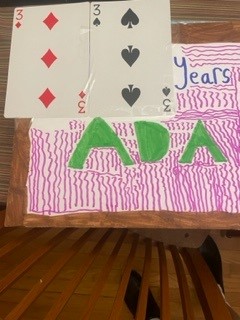
Green ADA lettering with pink squiggly background on a board with super large 3 of spades and 3 of diamonds playing cards glued on at upper left.
Happy 33 ADA

I wanted to get up a blog entry today because it is the 33rd anniversary of the Americans with Disabilities Act. Happy birthday!!!!!!!!!!!!!!!!!!!!!!!!!!!!!!!!!!!!!!!!!!!!!!!!!!!!!!!!!!!!


A short blog entry for today. It is possible I might have another blog entry this week that would be more detailed on something, but I wanted to be sure to get a blog entry up today. So here goes. It is a very short triple play so to speak, so you will not see the typical categories that my blog entries are divided into.


I

DOJ Title II Web Accessibility and Mobile Accessibility Rules Are Imminent.


Yesterday, DOJ announced that it has submitted a proposed rule to the Federal Register discussing their view of what title II websites for both the PC and mobile/cell phones might look like in terms of regulatory requirements to achieve meaningful accessibility for persons with disabilities. You can bet that will be a blog entry of mine when it comes out and no doubt will be widely blogged on by others.


II


Arizona State Law Prohibiting Transgender Girls from Participating in Athletics Thrown out with Respect to Transgender Girls Never Having Gone through Puberty.


In Doe v. Horne, here, Judge Zipps of the Arizona District Court held that the Arizona law prohibiting transgender girls from participating in sports where those girls have not gone through puberty or never will, violated the Constitution as well as title IX of the Civil Rights Act. The judge said that there was no rational basis for disallowing such individuals to participate in sports let alone any basis rising to the level of heightened scrutiny. The critical feature here is that all of the plaintiffs were transgender girls yet to go through puberty or were taking hormone blockers so that they never would go through puberty. An appeal has already been filed with the Ninth Circuit. It will be interesting to see what the Ninth Circuit does and ultimately how the Supreme Court deals with this.


III


In Deciding Whether a Person Is Entitled to SSDI, How a Service Animal Ameliorates the Individual’s Situation Cannot Be Factored in to That Decision


In Bryan H. v. Kijakazi, here, United States Magistrate Judge Jeffrey Gilbert remanded a case back to the Administrative Law Judge because the Administrative Law Judge failed to remove from her analysis of whether the claimant was entitled to SSDI benefits, the fact that the plaintiff needed a service animal in order to do certain jobs and even function in society. As we discussed here, SSDI does not factor in accommodations into deciding whether a person is entitled to benefits. My thanks to Prof. Leonard Sandler, a Clinical Law Professor at the University of Iowa, for sending me the Bryan H. case.


Happy birthday ADA!!!!!!!!!!!!!!!!!!!!!!!!!!!!!!!!!!!!!!!!!!!!!!


Stay cool everyone.

Today’s blog entry is on a topic that we have not previously discussed before or certainly we have not discussed much. The topic is §508 of the Rehabilitation Act. Otherwise known as 29 U.S.C. §794d. Case of the day is Orozco v. Merrick Garland decided by the U.S. Court of Appeals for the District of Columbia Circuit on February 17, 2023, here. As usual, the blog entry is divided into categories- with the exception of the last section the blog, the categories track the layout of the opinion-, and they are: introduction to §508; facts; court’s reasoning that §794d(f)(3) provides a private cause of action after exhaustion of administrative remedies; and my thoughts/takeaways. Of course, the reader is free to concentrate on any or all of the categories.


I

Introduction to §508


  1. In 1986, Congress required agencies to buy technology that employees with disability could use without needing special adaptive devices.
  2. In 1992, Congress broadened the definition of accessibility by requiring agencies buying technology to give users with and without disabilities comparable access to information and data.
  3. In 1998, Congress extended the comparable access mandate to a broader range of activities, i.e. developing, procuring, maintaining, or using technology. Congress also clarified the duty that providing comparable access obligation runs to individuals with disabilities who either are federal employees or members of the public seeking information or services.
  4. Also in 1998, Congress added an enforcement mechanism. The enforcement mechanism allows any individual with a disability to file an internal administrative complaint with the relevant agency. 29 U.S.C. §794d(f)(1)(A). If such a complaint is filed, Congress required the agency to address it using its procedures for discrimination in federally funded programs rather than its procedures for employment discrimination.
  5. The enforcement mechanism, through a series of statutory cross references, allows any individual filing an internal administrative complaint about inaccessible technology to utilize remedies and rights set forth in 29 U.S.C. §794a(a)(2). That section in turn makes the remedies, procedures, and rights contained in title VI of the Civil Rights Act of 1964 available to persons aggrieved by any act or failure to act by any recipient of federal assistance or federal provider of such assistance.
  6. In other words: 1) title VI of the Civil Rights Act of 1964 creates a cause of action to challenge race, color, or national origin discrimination in federally funded programs; 2) §794a(a)(2) of the Rehabilitation Act extend the same cause of action that title VI provides to persons aggrieved by disability discrimination in federally funded programs; and 3) §794d(f)(3) extends that same cause of action to anyone filing an administrative complaint about inaccessible technology under §794d.


II

Facts (taken directly from the opinion)


Jahinnslerth Orozco joined the FBI as an intelligence analyst in 2012. Because he is blind, Orozco relies on screen access software that “converts visual screen information into synthesized speech or into braille” to perform his job. Compl. ¶ 2, J.A. 8. 1


Such screen access tools, though, can be foiled by poor software design. For example, if a website includes an arrow button, its function might be obvious to a sighted user but difficult for screen access software to navigate without an alternative text description.


In April 2019, Orozco filed a complaint with the Assistant Attorney General for Administration at the Department of Justice, which oversees the FBI, alleging that the FBI had failed to deploy accessible technology in his workplace. The Assistant Attorney General for Administration generally handles complaints about discrimination in programs funded by the Department of Justice, and therefore is responsible for handling complaints about inaccessible technology. See 28 C.F.R. §§ 39.170(d)(4), 42.2(a); 29 U.S.C. § 794d(f)(2). To be 1 Because this case arises from a ruling on a motion to dismiss under Federal Rule of Civil Procedure 12(b)(6), we take as true the facts from Orozco’s first amended complaint and “matters of which we may take judicial notice,” and we “construe the facts, and reasonable inferences drawn from them, in the light most favorable” to Orozco. Singletary v. Howard Univ., 939 F.3d 287, 293 n.1 (D.C. Cir. 2019). 6 on the safe side, Orozco sent copies of his administrative complaint to both the FBI’s Equal Employment Opportunity Office, which handles employment discrimination complaints, and the FBI’s Chief Information Officer, which is responsible for procuring accessible technology. Orozco’s filing expressly reminded the FBI that it should handle his complaint using its procedures governing discrimination in federally funded programs. Compl. Letter 1–2, J.A. 29–30.


The FBI nonetheless routed Orozco’s complaint through its employee-discrimination process. See Letter from Arlene A. Gaylord to Timothy R. Elder (May 9, 2019), J.A. 33–35 (invoking 29 C.F.R. Part 1614’s employment discrimination procedures). Orozco once again filed his complaint with the Office of the Chief Information Officer, but he never received any response from that Office. Instead, the FBI’s Equal Employment Opportunity Office dismissed the complaint “for failure to state a claim of [employment] discrimination[.]” Letter from Richard Toscano to Timothy R. Elder (Aug. 7, 2019), J.A. 20. In the same letter, the FBI advised Orozco to contact the Office of the Chief Information Officer—which he had already done twice. Id.; see also Decl. Albert Elia Supp. Pl.’s Mem. Opp’n Def.’s Mot. Dismiss ¶¶ 6, 10–13, J.A. 26– 27.


Three months after his administrative complaint was dismissed, and having received no further communications from the FBI, Orozco filed suit in the United States District Court for the District of Columbia. His complaint reasserted the same violations of Section 794d(a) as his administrative filings, and it sought declaratory and injunctive relief against the Attorney General, who oversees the FBI. See Compl. ¶¶ (a)–(h), J.A. 15–16


The district court granted the FBI’s motion to dismiss. While recognizing “the challenges Mr. Orozco faces at his workplace,” the district court held that Section 794d(f)(3) “does not provide a cause of action” because it incorporates only the right to sue a “federal provider of * * * assistance” created by Section 794a(a)(2), and the FBI is not a federal provider of assistance when acting as an employer. Orozco v. Garland, No. 19–3336, 2021 WL 4502072, at *4–6 (D.D.C. Oct. 1, 2021). In a footnote, the district court declined to pass on the government’s separate argument that Orozco had failed to exhaust his administrative remedies. Id. at *6 n.3.


III

Court’s Reasoning That §794d(f)(3) Does Provide a Private Cause of Action after Exhausting Administrative Remedies


  1. 794d(f)(3) adopts the remedies, procedures, and rights set forth in §794a(a)(2). The provision then expressly defines to whom those remedies, procedures, and rights shall be available as being an individual with a disability filing a complaint under §794d(f)(1).
  2. 794a(a)(2) incorporates a set of remedies and rights found elsewhere-specifically in title VI of the Civil Rights Act of 1964. This particular section likewise separately defines to whom those rights are available as any person aggrieved by any recipient of federal assistance or federal provider of such assistance.
  3. While both §794d and §794a adopt the same enforcement remedies, rights, and procedures, they each independently define who gets to invoke those provisions to enforce the duty that each Section independently imposes.
  4. The Supreme Court has held that while §794a(a)(2) expressly incorporates title VI’s rights, remedies, and procedures-including its cause of action-§794a(a)(2) does not carry forward title VI’s separate definition of who can sue under that cause of action. Instead, its own definition of who is an authorized plaintiff governs.
  5. Congress must be taken at its word that when it incorporates the remedies, procedures, and rights set forth in another part of the Rehabilitation Act. This section of the Rehabilitation Act does that and no more.
  6. Congress created the cause of action to enforce the technology accessibility requirements of §794d. If Congress had meant also to incorporate §794a’s limits on who may sue, Congress would have said so. It didn’t do that. So, §794d(f)(3)’s own definition of qualifying plaintiff’s-any individual with a disability filing a complaint about technology accessibility-controls. Accordingly, Orozco can file suit.
  7. Orozco having the ability to file suit is a commonsense conclusion that gives the most natural meaning to each of the words Congress used in §794d((f)(3). That section says that the remedies, procedures, and rights in §794a(a)(2) are available to any individual with a disability filing an administrative complaint. Orozco certainly is an individual with a disability, and as an employee is one of the statutorily specified individuals who compiled the requisite administrative complaint about technology accessibility in the workplace. Holding that one section takes away what another section plainly grants puts the statute at war with itself and makes no sense.
  8. The district court’s reading of the statute appears to leave no one capable of using the rights, remedies, and procedures that §794d(f)(3) goes to all the trouble of adopting. In particular, this section if directed exclusively at inward facing activities, such as developing, procuring, maintaining, or using accessible technology within an agency.
  9. At oral argument, the government conceded that its reading of §794d(f)(3) does not leave any class of plaintiffs with a clear right to sue. Reading a statute expressly authorizing civil actions to authorize no civil actions renders that provision a nullity.
  10. The substantive protections of §794d apply equally to federal employees and to members of the public seeking information or services. All members of both groups are equally entitled to submit administrative complaints. Nothing in the substantive or remedial provisions of §794d even suggests that Congress meant to allow enforcement rights to members of the public seeking assistance, while deliberately withholding any such remedy from employees-especially when that leaves nobody able to sue. For that matter, nothing in the legislative history, executive interpretation, or purpose of this section supports the district court’s reasoning.
  11. The contemporaneous Executive Branch interpretation of §794d was exactly the opposite of the government’s current position. In 1999, the Atty. Gen. interpreted this section to authorize private lawsuits by employees and members of the public. It makes perfect sense that Congress decided not to incorporate the remedies section of §794a(a)(1) addressing employment discrimination lawsuit by federal employees because Congress specifically forbade agencies from treating administrative complaints about inaccessible technology as if they were about employment discrimination rather than about the failure to ensure federal funds are used in a nondiscriminatory manner.
  12. A violation of §794d does not resemble employment discrimination in any relevant respect.
  13. Congress’s purpose with §794d was to spur the innovative use of accessible technology by federal agencies. So, an agency can violate this section by failing to use available accessible technology regardless of whether the situation has anything to do with employment.
  14. The sovereign immunity argument doesn’t wash, because Congress has waived sovereign immunity when it comes to relief seeking other things than money damages, which is the case here.
  15. With respect to exhaustion of administrative remedies, it is unnecessary to decide it because it doesn’t affect the district court’s jurisdiction over the case. Orozco’s filing a complaint twice is sufficient to establish jurisdiction. Since any remaining exhaustion issues are not jurisdictional, it is up to the district court to address the question of a exhaustion on remand.
  16. Congress amended §794d to make sure that agencies would fulfill their responsibility to procure technology allowing employees with disabilities to participate fully in the workplace. To enforce that duty, Congress expressly provided a private right of action to any individual with a disability, including a federal employee, who first files an administrative complaint about inaccessible technology


IV

Thoughts/Takeaways


  1. A party has 90 days to seek cert. from the Supreme Court. As far as I can tell, no such petition was filed in this case.
  2. Even if cert. was sought, I am not aware of a United States Court of Appeals split on this issue. It will be interesting to see whether the circuit courts do split on this question. I am not sure they will as the reasoning of this case seems pretty solid. Also, the blowback from disability rights community for the government seeking cert. would be fierce. Since I don’t recall any such blowback occurring and the time for seeking review from the Supreme Court has passed, that makes me believe that Supreme Court review was not sought.
  3. Administrative exhaustion is required.
  4. The case is very significant because it creates a private cause of action, admittedly one for injunctive relief due to sovereign immunity, on behalf of a member of the public or an employee of the federal government who runs into an issue with the technology being utilized by the federal government being inaccessible to them. As a result, tester standing may become an issue. For a discussion of tester standing, see this blog entry for example.
  5. Attorney fees are available for §794d suits per §794a(b).

It has been a while since I blogged on the ADA with respect to amusement parks. On July 7, 2023, the 11th Circuit in a published decision came down with a case discussing the ADA with respect to amusement parks. Among the topics discussed are the screen out provisions and direct threat. The case has wider implications as well. The case is Campbell v. Universal Partners, here. As usual, the blog entry is divided into categories and they are: facts; ADA provisions involved; burden of proof; just what does necessary/necessity mean; complying with state law is not sufficient to activate the necessity defense; comparative advantage is not sufficient to activate the necessity defense; administrative feasibility and uniformity v. necessary; and thoughts/takeaways. As usual, the reader is free to focus on any or all of the categories.


I

Facts


Dylan Campbell was born with only one hand. It was hot, so he took his son to Universal’s Volcano Bay Waterpark and got in line to ride a waterslide version of a roller coaster. As he approached the front of the line, Universal pulled him aside and told him he was unfit to ride the ride. Universal did not allow people without two natural hands to ride that ride. Campbell then sued alleging a discriminatory eligibility criterion in violation of the ADA.


During the litigation, Universal stipulated that the manufacturer of the ride had identified no specific risks of riding to anyone like Campbell. However, due to a series of Florida laws, regulations, rules, and industry practices, Universal had no choice but to follow the manufacturer of the ride recommendations regardless of whether the manufacturer based those requirements on actual risks, speculation, or even discrimination.


II

ADA Provisions Involved


  1. Under title III of the ADA, discrimination includes, per 42 U.S.C. §12182(b)(2)(A)(i), the imposition or application of eligibility criteria that screen out or tend to screen out an individual with a disability or any class of individuals with disabilities from fully and equally enjoying any goods, services, facilities, privileges, advantages, or accommodations. So, the general rule is that places of public accommodations are prohibited from imposing eligibility criteria that tend to preclude those with disabilities from enjoying the public accommodation’s good or service.
  2. A public accommodation can impose discriminatory eligibility criteria if such criteria can be shown to be necessary for the provision of the goods, services, facilities, privileges, advantages, or accommodations being offered- the necessity exception.
  3. The ADA does not define what it means by, “necessary.”
  4. The ADA, per 42 U.S.C. §12182(b)(1)(D)(i), also prohibits public accommodations from avoiding liability under the ADA through contractual delegation. It expressly states that public accommodation cannot directly or through contractual or other arrangements, utilize standards or criteria or methods of administration having the effect of discriminating on the basis of disability.
  5. The ADA also has a relationship to other laws provisions. That section, 42 U.S.C. §12201(b), provides that nothing in it should be construed to invalidate the remedies, rights, and procedures of any federal law or law of any State providing greater or equal protection for the rights of individuals with disabilities. So, the ADA establishes the floor for the rights of persons with disabilities, but it does not limit the ceiling.


II

Burden of Proof


  1. In a case like this, plaintiff has the initial burden to show that: 1) he or she has a disability; 2) the defendant is a place of public accommodation; the defendant imposed eligibility criterion that screened out or tended to screen out an individual with a disability. Once the plaintiff shows this, the burden then shifts to the defendant to show that the eligibility criterion is necessary for the provision of the goods, services, facilities, privileges, advantages, or accommodations being offered.
  2. This burden shifting is consistent with both the statute, per 42 U.S.C. §12182(b)(2)(A)(i), and with how courts have interpreted parallel clauses of 42 USC § 12182(b)(2)(A).
  3. In §12182(b)(2)(a)(ii), the defendant private entity bears the burden of proof on the fundamental alteration inquiry. §12182(b)(2)(a)(iii), requires provisions of auxiliary aids and services unless the public accommodation can demonstrate that taking such steps would fundamentally alter the nature to facilities being offered or would result in an undue burden. While the 11th Circuit has not interpreted this section of the ADA, other circuits have. Without exception, those circuits have held that public accommodations bear the burden of proving either a fundamental alteration or an undue burden.
  4. The 11th Circuit has noted the same type of analysis for title II cases whereby if a plaintiff makes an initial showing of disparate treatment under the FHA or the ADA, the burden of going forward shifted to the defendant to establish the differential treatment is justified.
  5. This burden shifting analysis makes sense on several levels. First, the public accommodation or public entity is in a unique and far better position than the plaintiff to know why compliance fundamentally alters the nature of the facility it offers or why differential treatment would be justified, or whether such an eligibility criteria is necessary.
  6. Whether 1) a certain requirement is necessary to the facility; or 2) changing the requirement would fundamentally alter the defendant’s facility; or 3) differential treatment is justified turns on fact uniquely in the defendant’s position. That is, all of those determinations go to the core of the facility offered by the defendant. Further, it is the public accommodation or public entity with the incentive to show why noncompliance would be necessary and why compliance fundamentally alters the nature of what is being offered, or why compliance results in an undue burden.
  7. The sections of the ADA dealing with architectural barriers and the whole concept of readily achievable are not applicable to this kind of case. Architectural barriers present a different kind of situation so it makes sense that the way the courts have looked at burden shifting in those cases is different than what it would be in this case.
  8. Accordingly, 42 U.S.C. §12182(b)(2)(A)(i) has to be read so that the burden is on the public accommodation to show that discrimination is necessary where a plaintiff makes the requisite initial showing. Plaintiff made that initial showing because everybody agrees that Campbell has a disability and that Volcano Bay is a place of public accommodation. Also, Universal hasn’t contacted that it’s two hands eligibility criterion screens out or tends to screen out persons with disabilities. Universal therefore forfeited any argument otherwise.


III

Just What Does Necessary/Necessity Mean


  1. Necessary does include discriminatory eligibility criteria imposed to ensure safety.
  2. A prohibition is necessary if it is required for legitimate safety reasons.
  3. The ADA does not define, “necessary.”
  4. The ordinary meaning of “necessary,” doesn’t provide much guidance either. At best, all that can be said is the eligibility criteria must be in some way “essential,” or “cannot be avoided,” and offering a facility.
  5. A criteria providing a safe user experience is essential in offering a facility for public use because a public accommodation would go out of business quickly if the facilities and offered to the public were dangerous.
  6. 42 U.S.C. §12182(b)(3) specifies that nothing requires an entity to permit an individual to participate in or benefit from the facilities of such entity where that individual poses a direct threat to the health or safety of others. That provision continues to say that the term direct threat means a significant risk to the health or safety of others that cannot be eliminated by a modification of policy, practices, or procedures, or by the provision of auxiliary aids or services. Therefore, it is fair to say that congressional intent includes the safety of others as being necessary.
  7. It is not a far leap to conclude that the customer’s own safety is likewise necessary (see the thoughts/takeaways section of this blog entry for my strong disagreement with this particular conclusion of the court).
  8. 28 C.F.R. §36.301(b) provides that public accommodations may impose legitimate safety requirements necessary for safe operation.
  9. Legitimate safety requirements must be based upon actual risks and not on mere speculation, stereotypes, or generalizations about individuals with disabilities.
  10. “Necessary,” can include more than what is required for safety. Nothing in title III suggest that the general definition of “necessary,” is limited to just safety. Even the DOJ regulation says that safety is a permissible justification for discriminatory eligibility criterion and does not say that it is the only permissible justification.


IV


Complying with State Law Is Not Sufficient to Activate the Necessary Defense


  1. Florida law requires amusement park to comply with ASTM standards. ASTM standards in turn demand compliance with manufacturer recommendations. Here, the manufacturer says that Campbell can’t ride because he doesn’t have two hands.
  2. The texts of the ADA precludes a court from finding that it is necessary to comply with state law when state law otherwise requires a public accommodation to violate the ADA. Such an argument conflicts with the ADA’s non-preemption provision when state law requires less discrimination protection for those with a disability than does the ADA. The ADA explicitly provides, per 42 U.S.C. §12201(b), that the ADA does not preempt state laws providing greater protection for persons with disabilities. Therefore, a state law providing less protection than the ADA to those with disabilities is preempted by the ADA. A state law at odds with a valid act of Congress is no law at all.
  3. Even apart from the ADA’s preemption provision, Universal’s construction of the ADA does not make any sense. Congress passed a sweeping law prohibiting discrimination unless discrimination is necessary. If compliance with state law were necessary, then any State could unilaterally nullify the ADA by enacting a state law requiring discrimination, which can’t possibly be right.
  4. If all state laws were insulated from title II’s reasonable modification requirement solely because they were state laws, state law would be an obstacle to the accomplishment and execution of the full purposes and objectives of Congress in enacting title II. The same analysis applies to title III.
  5. If a state imposed a requirement on businesses related to legitimate safety concerns, then compliance with that state law is necessary. However, compliance would be necessary because the rule promoted safety and not because the rule was a state law.
  6. Defendant’s argument that they will face criminal and civil penalties if they don’t have this eligibility criterion, simply does not fly in light of the supremacy clause. If a federal law requires Universal to allow Campbell to ride and state law prohibits it, then Universal must let Campbell ride. In other words, a discriminatory state law is not a defense to liability under federal law, rather it is a source of liability under federal law. If Florida were to seek an enforcement action or a declaratory judgment against Universal, Universal would be able to assert the ADA as a defense. In short, federal law trumps state law when the two conflict.
  7. When Justice Gorsuch was on the 10th Circuit, he stated that state officials relying on their compliance with discriminatory state laws as evidence of the reasonableness will normally find themselves proving their own liability and not shielding themselves from it. So, ADA liability does not get excused where discriminatory eligibility criteria exists because of state law.


V

Comparative Advantage Is Not Sufficient to Activate the Necessary Defense


  1. The mere fact that a manufacturer has more experience and therefore a comparative advantage in identifying safety risks does not make complying with the recommendations necessary when those recommendations are not in fact based upon actual risks.
  2. Only safety requirements addressing actual (emphasis in opinion), safety risks are necessary under the ADA.
  3. Congress enacted the ADA to address disability discrimination based upon stereotypes about disabilities. 42 U.S.C. §12101(a). So, it is not surprising that the ADA expressly prohibits discrimination against people “with disabilities” and those perceived as having a physical or mental impairment regardless of whether the impairment limits or is perceived to limit a major life activity. 42 U.S.C. §12102(3)(A).
  4. Stereotypes about what people with disabilities can or cannot do not justify exclusion under the ADA.
  5. A manufacturer imposed safety requirement is necessary only to the extent that it is related to actual risks to the health and safety of guests.
  6. A safety requirement imposed because of stereotypes is not necessary within the meaning of the ADA in light of how the ADA defines a disability. So, a manufacturer’s eligibility requirement, without more-i.e. based upon actual safety risks-does not qualify as necessary just because a manufacturer has a comparative advantage compared to a public accommodation in designing eligibility requirements.
  7. 28 C.F.R. §36.301(b) provides that safety requirements must be based upon actual risks and not on mere speculation, stereotypes, or generalizations about individuals with disabilities.
  8. The hazard analysis reveals no actual risks to people like Campbell. In fact, the parties stipulated that aside from identifying one risk involving a potential hazard for visually impaired patrons, the hazard analysis performed by two different entities identified no specific risks for anyone with a limp difference or other physical disability. Based upon the parties stipulation, the recommendation made to the manufacturer identified no safety related justification. Universal also does not suggest a different reason for why the recommendation of the manufacturer that such an inclusion was necessary.


VI

Administrative Feasibility and Uniformity v. Necessary


  1. Universal’s claim that making particularized safety determinations about the inability or ability of the guests to safely ride is administratively infeasible is overstated in light of the record. That is, at this point in the case, Universal has not shown that administrative feasibility is relevant.
  2. Universal stipulated that aside from identifying one risk involving a potential hazard for visually impaired patrons, the hazard analysis identified no specific risks for anyone with a limp difference or other physical disability. So, it isn’t as though actual risks for people with certain limb differences were found and that risks specific to those with other types of limb differences being cost prohibitive existed. Instead, Universal stipulated that no specific risk for anyone with a limp difference was identified at all. Further, how a risk to a visually impaired rider has any relevance to a risk for those with limb differences is not self-explanatory.


VII

Thoughts/Takeaways


  1. I strenuously disagree that it is not a far leap to include that direct threat to others also includes direct threat to self. If the DOJ felt that it did, it could have adopted the EEOC view of direct threat, which includes both direct threat to others and to self. See Chevron v. Echazabal, here. In fact, the Supreme Court in Chevron v. Echazabal, on page 82 of the opinion, specifically mentioned that DOJ and other agencies decided not to include direct threat to self in its regulations. They make a similar comment about Health, Education, And Welfare final implementing regulations in footnote 4 of that opinion. So, it simply is too far of a leap to assume that direct threat to others also includes direct threat to self. The distinction matters a great deal. The last couple years of my practice has seen me become involved in medical licensing matters whereby medical licensing boards via PHP’s attempt to force out persons with disabilities from healthcare professions on the basis of their disabilities. An issue that comes up frequently in those cases is the distinction between direct threat to others v. direct threat to self and others. From reading Chevron v. Echazabal, DOJ and other regulatory entities would have been perfectly within their rights to also include direct threat to self but they did not do so.
  2. This case has much wider implications than just amusement parks. As I mentioned above, in the licensing field “ability to practice safely,” arises frequently. This opinion emphatically says that the standard is direct threat and that any threat involving safety requirements must be legitimate safety requirements based upon actual risks and not upon stereotypes.
  3. The necessity defense is an affirmative defense. That is, the defendant has the burden of showing that an eligibility criteria that screens out persons with disabilities is necessary.
  4. Safety can be necessary with respect eligibility criteria but the criteria must be legitimate safety requirements based upon actual risks.
  5. It is possible that eligibility criteria besides a safety base criteria, that screen out people with disabilities could be necessary. It would be up to the defendant to show that such is the situation.
  6. Compliance with State law that discriminates against persons with disabilities is not by itself sufficient to activate the necessary defense. The supremacy clause simply won’t permit that.
  7. It isn’t unusual for Circuit Court opinions to cite to a lower court opinion by a sitting Justice of the Supreme Court. I view that as a situation where the appellate court is trying to add persuasiveness to its opinion and also telegraphing to a Justice on the Supreme Court that they should be aware of something they said previously if such a case comes up the Supreme Court.
  8. Manufacturers have an obligation to make sure that if they suggest our riders with disabilities be excluded from certain rides, they have objective evidence to show actual risks. An amusement park operator blindly relying on manufacturer’s guidance, when the manufacturer did nothing to figure out what actual risks were based upon scientific evidence, will not protect the amusement park from ADA liability.

I hope everyone had a Fourth of July weekend that was fantastic and safe.


Our blog entry for the week is a case that we have blogged on before. It asks the question of whether a claim of morbid obesity requires an underlying physical impairment or mental impairment or is just the claim of morbid obesity as a scientific standard is sufficient by itself. As we discussed previously, here, a Court of Appeals in Texas had held that morbid obesity by itself was sufficient to be able to claim protection under the Texas Commission on Human Rights Act (TCHRA). We also blogged here where the Washington Supreme Court reached the same conclusion. The Texas case was appealed to the Supreme Court of Texas (Texas actually has two Supreme Courts-one for civil cases and one for criminal cases). The Supreme Court of Texas winds up deciding that the trend of cases at the federal level where morbid obesity claims require an underlying physical or mental impairment is the correct way to go. The decision was 7-2 with two Justices concurring and two Justices dissenting. As a preliminary matter, Texas does waive sovereign immunity in cases like this, but the waiver depends upon essentially getting by, for lack of a better word, a summary judgment motion first, i.e. having to show that a genuine issue of material fact exists. As usual, the case is divided into categories and they are: Facts; Justice Hecht majority opinion; Justice Blacklock concurring opinion; Justice Boyd dissenting opinion; and thoughts/takeaways. Of course, the reader is free to focus on any or all of the categories.


Facts:


The facts of this case are quite egregious and can be found in great detail in the opinion, here. Basically, you have a medical resident that weighed over 400 pounds. The program where she was doing a residency at did not appreciate that. She had a particular problem with the person who ran the residency program, an interim director. At one point, the interim director actually went into the University legal counsel’s office to figure out whether she could terminate the resident because of the plaintiff’s weight. The lawyer for the school said that she could not terminate based upon that reason because it would be discrimination. After hearing that, she repeated to the attorney that she believed that the resident was not performing well because of her weight and that she needed to find another reason to terminate her from the program. The University did not take steps to protect the information from when the program director consulted legal counsel when it was revealed what the nature of that conversation was at the program director’s deposition. She filed a claim with the Texas Workforce Commission and the EEOC and then upon receiving a right to sue letter brought suit. Her claim was that she was dismissed as a result of her morbid obesity. However, she never claimed either in her complaint or in her deposition any underlying physical or mental impairment associated with the morbid obesity. She also originally brought both an actual disability claim and a regarded as claim. However, on appeal, she abandoned the actual disability claim and proceeded only under the regarded as claim.


I

Justice Hecht Majority Opinion


  1. In 1993, the Texas legislature amended the TCHRA to bring it into compliance with the ADA. That enactment modified the definition of disability contained in the TCHRA to conform with the ADA definition.
  2. The definition of disability under the ADA at the time the TCHRA was amended is essentially the same as it is today. Both definitions call for a physical or mental impairment.
  3. At the time the TCHRA was amended, the final implementing federal regulations defined an impairment as, “any physiological disorder, or condition, cosmetic disfigurement, or anatomical loss affecting one or more of the following body systems: neurological, musculoskeletal, special sense organs, respiratory (including speech organs), cardiovascular, reproductive, digestive, genito-urinary, hemic and lymphatic, skin, and endocrine.” It can be presumed that the Texas legislature was aware of its regulatory interpretation and was accepting of that meaning of impairment when it adopted the ADA definition of disability.
  4. Since the TCHRA express purpose is to provide for the execution of the policies embodied in title I of the ADA and its subsequent amendments, the interpretation of the definition of disability is guided by both federal court decisions interpreting the ADA and the federal administrative regulations regarding the ADA.
  5. The federal regulatory definition of impairment today is not that much different from the definition in 1993. Today, per 29 C.F.R. §1630.2(h),an impairment is, “any physiological disorder or condition, cosmetic disparagement, or anatomical loss affecting one or more body systems, such as neurological, musculoskeletal, special sense organs, respiratory (including speech organs), cardiovascular, reproductive, digestive, genitourinary, immune, circulatory, hemic, lymphatic, skin, and endocrine.”
  6. The plain language of both the 1993 and the current definition of impairment in the final implementing regulations require a physiological disorder or condition in order to find an impairment.
  7. Weight, even when it is outside the normal range, is not a physiological disorder or condition, rather it is a physical characteristic. The mere physical characteristic does not, without more, equal a physiological disorder. So, a plaintiff has to be able to point to a physiological disorder or condition causing one’s weight in order to show an impairment.
  8. The parties appear to agree that obesity is not an impairment absent evidence of an underlying physiological disorder or condition. So, it would make no sense to require an underlying physiological disorder or condition for morbid obesity but not for obesity.
  9. The United States Court of Appeals for the Sixth, Seventh, and Eighth Circuits have all concluded that the plain language of the EEOC regulation compels the conclusion that morbid obesity must stem from a physiological disorder or condition in order to qualify as an impairment for regarded as claims.
  10. The Second Circuit has held that a physiological disorder is required to show impairment based upon the regulatory definition in a case involving obesity and not morbid obesity.
  11. The federal decisions are of great help in understanding what constitutes a disability qualifying impairment since there have been so few cases in Texas involving morbid obesity. In a footnote, the Texas Supreme Court noted that there’ve only been three reported morbid obesity cases in the last 30 years in Texas.
  12. Whether obesity is a disorder in the medical community doesn’t say much with respect to whether morbid obesity qualifies as an impairment under the Texas Labor Code.
  13. In a footnote, the Texas Supreme Court says that the ADA is an antidiscrimination statute and not a public health statute. Therefore, Congress’s desires as it relates to the ADA do not necessarily align with those of the medical community.
  14. Reading the regulation as a whole and looking at dictionaries, reveals that a physiological disorder or condition means an abnormal bodily function or state. However, the accumulation of fat cells is a normal bodily process, so asserting that one is overweight is insufficient by itself to show a physiological disorder or condition.
  15. A person’s morbid obesity may be the result of that person’s normal natural response to the person’s lifestyle choices or eating habits. Therefore, a plaintiff would have to show that her body’s process of accumulating fat cells is somehow abnormal, i.e. the result of an underlying physiological disease or condition.
  16. The EEOC interpretive guidance on title I of the ADA, 29 C.F.R. Pt. 1630, App. at 1630.2(h), here, also support that morbid obesity is not an impairment without an underlying physiological disorder or condition. That guidance states: “the definition of the term “impairment” does not include physical characteristics such as eye color, hair color, left-handedness, or height, weight, or muscle tone that are within “normal” range and (emphasis added by me), are not the result of a physiological disorder. The definition, likewise, does not include characteristic predisposition to illness or disease. Other conditions, such as pregnancy, that are not the result of a physiological disorder are also not impairments.”
  17. A natural reading of the interpretive guidance is that weight is an impairment only if it falls outside the normal range and (emphasis in opinion), it occurs as a result of a physiological disorder. Both requirements have to be satisfied. This reading is further supported by the interpretive guidance reference to other conditions not being the result of a physiological disorder, such as pregnancy, not being considered an impairment by the EEOC.
  18. It goes too far to say that any physical characteristic slightly outside the normal range would be a physical impairment in the absence of an underlying physiological cause. Such a reading would be inconsistent with the TCHRA text and purpose and would transform the regarded as claim into a catchall cause of action for discrimination based upon appearance, size, and any number of other things far removed from the reasons why the TCHRA was passed.
  19. The plaintiff does not contend that there is evidence that her morbid obesity resulted from a physiological disorder or that such was the defendant’s perception. In fact, she said as much in her deposition.
  20. The missing pieces are any evidence or inference that plaintiff’s coworkers regarded her obesity as being caused by health issues rather than causing health issues. The distinction matters.


II

Justice Blacklock Concurring Opinion


  1. Excessive weight is a physical characteristic and not a disability.
  2. Excessive weight may be a symptom of an underlying physiological impairment, in which case it is the underlying physiological impairment and not the weight itself that qualifies as a disability triggering the employment protections of the Texas Labor Code.
  3. Whether obesity is considered an impairment, disability, disorder, condition, or anything else by the medical community in 2023, says nothing about whether obesity qualifies as a disability or impairment under the Texas Labor Code enacted in 1993.
  4. The Labor Code is a legal text and therefore, the meaning of the words in that statute must be the same today as it was in 1993 when the provisions were enacted. Mentioning Justice Scalia, statutory terms mean what they are conveyed to reasonable people at the time they were written.
  5. There is no shortage of evidence from the time of the statute’s enactment and shortly thereafter, including from federal cases interpreting the same language, that obesity was regarded as a physical characteristic and not a disability in the absence of an underlying physiological disorder.
  6. The Court needs to be wary about adopting federal case law when it comes to interpreting Texas statutes because it is entirely possible that Texans prefer to go in a different way based upon the wording of their own legislation. That is, federal sources of law should not become controlling authority and should only be used as guidance when appropriate.
  7. Extending the Texas Labor Code to the obese would have substantial social and economic consequences. After all, that might render 50% of the population disabled by 2030. On a matter of such vast economic and political significance, the Court should expect the legislature to speak clearly, which is not the case here.


III

Justice Boyd Dissenting Opinion


  1. Nothing in the Texas Labor Code imposes an underlying physiological disorder or condition requirement or otherwise limits the term disability to physical or mental impairment resulting from any particular cause.
  2. With the amendments to the ADA, Congress amended the ADA to expressly reject the Supreme Court of the United States inappropriately high level of limitation necessary to obtain coverage under the ADA and to reinstate a broad view of the ADA’s applicability.
  3. With the amendments to the ADA, Congress amended the ADA to expressly require courts to construe the term disability in favor of broad coverage to individuals to the maximum extent permitted by the ADA’s terms.
  4. Congress expressly conveyed its intent that the question of whether an individual’s impairment as a disability under the ADA should not demand extensive analysis. Instead, the focus should be on whether covered entities complied with their ADA obligations.
  5. The Texas Labor Code likewise requires that the term disability be construed in favor of broad coverage of individuals and to the maximum extent allowed.
  6. In a regarded as claim, the plaintiff must show that the defendant regarded her as having more than a minor impairment that is expected to last less than six months, but she does not have to show that the defendant regarded her as having an impairment that limited the major life activity.
  7. The Texas Labor Code does not define the term impairment. When looking at dictionaries, dictionary to find an impairment as simply a diminishment, deterioration, or loss of function or ability.
  8. Under the plain meaning, and impairment is simply a loss, reduction, or limitation of function or ability. To qualify as a disability, the impairment must be mental or physical and must substantially limit a major life activity. However, nothing about the definition requires that the limitation be caused by an underlying physiological disorder or any other particular cause or source.
  9. Neither the parties nor the majority points to any other statute using the term impairment in a way suggesting anything other than its common, ordinary meaning, much less say that loss or limitation in function qualifies as an impairment only if it results from a particular cause.
  10. When the legislature intended to limit a statutory reference to impairments to those resulting from a particular cause, it consistently and expressly includes that limitation within the statute, such as for workers compensation purposes and for purposes of deciding whether a judge is fit to serve.
  11. In a footnote, Justice Blacklock says that the common ordinary meaning of impairment has not changed since 1993.
  12. No prior decision of the Texas Supreme Court has ever required that this particular statute requires the claimant’s physical loss or limitation to result from any particular cause.
  13. Other sections of the Texas Labor Code indicate that an impairment is simply a condition limiting claimant’s function. Further, two other provisions appear to use the term limitation interchangeably with the term impairment.
  14. The Texas Labor Code expressly compels court to construe the term broadly without imposing any unexpressed requirements.
  15. In a footnote, Justice Blacklock says that the majority concerns about social and economic consequences of a contrary decision are misplaced. In particular, the majority forgets about how a major life activity must be substantially limited. Further, if the legislature makes a policy choice to define the term disability more broadly than wise, a court is not at liberty to veto that choice.
  16. Most people suing for discrimination based upon disability will go with the actual disability prong. Thus, they will have to show a substantial limitation in at least one major life activity. Further, for those opting for the regarded as claim, the plaintiff would have to show that the disability was more than minor. Therefore, plaintiffs cannot rely on the fact that they are obese or morbidly obese. Instead, they have to demonstrate that the obesity is about physical limitations that are substantial or are perceived to be more than just minor.
  17. 21.105 of the Texas Labor Code says that the provision referring to disability discrimination applies only to discrimination because of her on the basis of a physical or mental condition that does not impair an individual’s ability to reasonably perform a job. So, an employer does have the ability to terminate an employee because of impairment if the person cannot reasonably perform her job. Therefore, this particular section actually reduces the number of people who can sue when that disability impairs their performance.
  18. Federal law provides no clear guidance and is conflicting at best with respect to whether a morbid obesity claim requires an underlying physiological impairment.
  19. 29 C.F.R. §1630.2(h)(1) defines an impairment as a physiological disorder or condition affecting one or more body systems. The Texas Workforce Commission has adopted a rule defining impairment in the same way, though that rule only applies to provisions addressing housing discrimination and fair housing requirements as opposed to employment discrimination. Morbid obesity is undoubtedly such a physiological condition.
  20. The regulations define disability in terms of limiting mental and physical conditions and not in terms of underlying mental or physical processes.
  21. The statute requires an impairment and not just the condition.
  22. The EEOC regulation talking about physical characteristics could easily be read as if the “and,” is actually an, or.”
  23. All the federal courts within the Fifth Circuit (which is Texas), have declined to impose an underlying physiological disorder requirement for weight related disability claims.
  24. The evidence clearly establishes that the University perceived the plaintiff not only being morbidly obese but also being physically impaired as a result of her obesity. In fact, the University doesn’t dispute that, rather they just say that they didn’t perceive an underlying physiological disorder. Whether they perceive an underlying physiological disorder is irrelevant.
  25. While there were certainly numerous concerns with the plaintiff’s performance, the plaintiff only has to show that the impermissible concerns were a motivating factor for the adverse actions even if other factors also motivated those actions. Plenty of direct evidence exists to show that disability was a motivating factor in the termination.


IV

Thoughts/Takeaways


  1. Texas and Oklahoma are the only two States with a highest court for civil matters and another one for criminal matters.
  2. It will be interesting to see how this opinion affects the courts in the Fifth Circuit when they deal with obesity centered claims.
  3. The federal courts are indeed all over the place with respect to whether morbid obesity requires an underlying physiological or mental condition. For example, we discussed here how the state of Washington has decided that it does not. So, be sure to check your particular federal or state jurisdiction when dealing with obesity claims.
  4. The amendments to the ADA made it such that it shouldn’t be too much of a stretch to find a physical or mental impairment that substantially limits a major life activity when a person is morbidly obese. That is, you may not even have to allege morbid obesity to find coverage under the ADA actual disability prong where a person is morbidly obese. So, I would not give up easily, if I am on the plaintiff side, in pursuing an actual disability claim when representing a client with morbid obesity.
  5. The reason morbid obesity gets so confusing is that unlike other disabilities the physical or mental impairment isn’t obvious. For example, a deaf ,Deaf, or hard of hearing person clearly has a physical impairment, i.e. hearing loss. They also are substantially limited in the major life activity of communicating with others. Most other disabilities are such that the physical or mental impairment is fairly obvious. Morbid obesity and obesity in general is an exception to that.
  6. Jurisdictions, though it is not necessarily a trend, around the country are enacting laws or ordinances protecting people who are obese from discrimination.
  7. In another life, I litigated over a missing comma. Here, I could foresee litigation over whether the EEOC interpretive guidance “and,” really means “and,” and not, “or.” Of course, it is in an EEOC interpretive guidance and is not necessarily entitled to much deference per Kisor, which we discussed here.
  8. The policy concern that the concurrence has about obesity in Texas is not without justification. For example, the What’s Cooking America website says that Texans are estimated to eat 800,000 orders of chicken fried steak every day. That said, you don’t have to read much to see how obesity is becoming an issue throughout America.
  9. The dissenting opinion does a nice job of laying out the arguments of why morbid obesity should not require an underlying physiological or mental condition.
  10. Interesting perspective from the dissenting opinion talking about the distinction between impairment and conditions. The dissent also talks about the distinction between limiting mental and physical conditions v. underlying mental or physical processes, which is interesting as well.
  11. The advantage to the regarded as prong is that you don’t have to show a substantial limitation on a major life activity. All you have to do is show a physical or mental impairment. On the other hand, the regarded as prong has its disadvantages. First, at least with respect to the ADA, it doesn’t apply to an impairment that is both transitory and minor (the transitory part did not appear in this case). Second, it does not allow for reasonable accommodations.
  12. I am licensed in Texas. That said, the vast majority of my practice is federal based rather than state based. Since I am licensed in Texas, I could do some legal research into what does §21.105 of the Texas labor Code actually mean. That section states: “Sec. 21.105. DISCRIMINATION BASED ON DISABILITY. A provision in this subchapter or Subchapter B referring to discrimination because of disability or on the basis of disability applies only to discrimination because of or on the basis of a physical or mental condition that does not impair an individual’s ability to reasonably perform a job.” The question I have about the statutory section is what does “reasonably perform a job,” mean? That is, it would seem to suggest that it must mean whether a person could perform the job with or without reasonable accommodations. If it does not mean that, then this Texas statute goes way below the ADA in terms of its coverage because the ADA also contains the qualified requirement, i.e. whether the person can do the essential functions of the job with or without reasonable accommodations. If I get a chance, I will do that research. I will be surprised if there is not a reasonable accommodation requirement baked into the statutory provision. It wouldn’t make sense otherwise for there not to be, but you never know.
  13. If question of morbid obesity as a disability goes to the Supreme Court, my guess is that this configuration of the United States Supreme Court would hold that morbid obesity requires an underlying physiological or mental impairment. Again, the workaround to that is it shouldn’t be terribly difficult to find mental or physical impairments that substantially limit a major life activity when a person is morbidly obese besides the morbid obesity.
  14. The concurrence requiring the legislature to speak clearly when huge policy implications are involved reminds me of the United States Supreme Court decision invoking the major question doctrine, which we discussed here.

As everyone knows, I don’t usually blog twice a week. You wouldn’t think I would do that the Friday before the July 4 weekend. However, two Supreme Court decisions came down yesterday. The most notable one that came down yesterday was the decision involving Harvard and the University of North Carolina with respect to race-based admissions practices. As everyone knows, the majority opinion threw out those practices quite emphatically. It was very interesting reading the concurring opinion of Justice Thomas and comparing that to the dissenting opinions of Justice Sotomayor and Justice Jackson. It is Justice Gorsuch’s opinion that may have thrown a grenade into affirmative action generally when he reasons that affirmative action for those receiving federal funds is prohibited by title VI of the Civil Rights Act. Makes me wonder whether affirmative action for federal contractors isn’t dead. It will be interesting to see what the labor and employment lawyers on the management side think of the broader impact of this decision.


Two other things happened this week. First, the Pregnant Workers Fairness Act (PWFA), went into effect. The EEOC will be issuing regulations before too long one hopes. They did issue a brief question and answer document, here. Second, yesterday the Supreme Court came down with the decision in Groff v. DeJoy, here, where they unanimously threw out the de minimis standard for undue hardship established in Hardison. It is the PWFA and Groff that is the subject of today’s blog. As usual the blog entry is divided into categories and they are: Pregnant Workers Fairness Act; Groff v. Dejoy, which is divided into the categories of: Facts; Hardison in Historical Context; What Did Hardison Actually Say; What Is the Standard Going Forward and Fleshing out That Standard; Justice SotoMayor Concurring Opinion in Which Justice Jackson Joined; and Thoughts/Takeaways for the entire blog entry. The reader is free to concentrate on any or all of the categories throughout this blog entry.


I

Pregnant Workers Fairness Act (PWFA)


  1. PWFA went into effect June 27.
  2. PWFA applies to employers of 15 or more employees.
  3. The EEOC is now taking charges for violations of that act. Any charges for violations of that act would have to stem from an occurrence on June 27 or later. The PWFA does require exhaustion of administrative remedies with the EEOC prior to filing suit.
  4. PWFA protects employees and applicants with known limitations related to pregnancy, childbirth, or related medical conditions. It requires reasonable accommodations for person with a limitation related to pregnancy, childbirth, or related medical conditions.
  5. A reasonable accommodation is a change to the work environment or the way things are usually done at work.
  6. Requires an interactive process.
  7. A covered employer cannot require an employee to take leave if another reasonable accommodation can be provided that would let the employee keep working.
  8. Has a retaliation and an interference provision.
  9. EEOC will be issuing regulations before too long it is hoped.


II

Groff v. DeJoy


  1. Facts


Gerald Groff is an Evangelical Christian who believes for religious reasons that Sunday should be devoted to worship and rest, not “secular labor” and the “transport[ation]” of 2 GROFF v. DEJOY Opinion of the Court worldly “goods.” App. 294. In 2012, Groff began his employment with the United States Postal Service (USPS), which has more than 600,000 employees. He became a Rural Carrier Associate, a job that required him to assist regular carriers in the delivery of mail. When he took the position, it generally did not involve Sunday work. But within a few years, that changed. In 2013, USPS entered into an agreement with Amazon to begin facilitating Sunday deliveries, and in 2016, USPS signed a memorandum of understanding with the relevant union (the National Rural Letter Carriers’ Association) that set out how Sunday and holiday parcel delivery would be handled. During a 2- month peak season, each post office would use its own staff to deliver packages. At all other times, Sunday and holiday deliveries would be carried out by employees (including Rural Carrier Associates like Groff) working from a “regional hub.” For Quarryville, Pennsylvania, where Groff was originally stationed, the regional hub was the Lancaster Annex.


The memorandum specifies the order in which USPS employees are to be called on for Sunday work outside the peak season. First in line are each hub’s “Assistant Rural Carriers”— part-time employees who are assigned to the hub and cover only Sundays and holidays. Second are any volunteers from the geographic area, who are assigned on a rotating basis. And third are all other carriers, who are compelled to do the work on a rotating basis. Groff fell into this third category, and after the memorandum of understanding was adopted, he was told that he would be required to work on Sunday. He then sought and received a transfer to Holtwood, a small rural USPS station that had only seven employees and that, at the time, did not make Sunday deliveries. But in March 2017, Amazon deliveries began there as well.


With Groff unwilling to work on Sundays, USPS made other arrangements. During the peak season, Sunday deliveries that would have otherwise been performed by Groff were carried out by the rest of the Holtwood staff, including the postmaster, whose job ordinarily does not involve delivering mail. During other months, Groff ’s Sunday assignments were redistributed to other carriers assigned to the regional hub.1 Throughout this time, Groff continued to receive “progressive discipline” for failing to work on Sundays. Finally, in January 2019, he resigned. A few months later, Groff sued under Title VII, asserting that USPS could have accommodated his Sunday Sabbath practice “without undue hardship on the conduct of [USPS’s] business.”


In two different footnotes, the Supreme Court noted that other employees complained about the plaintiff’s absences, including at least one filed a grievance. Also, plaintiff’s resignation was done, according to the plaintiff (the District Court found a genuine issue of material fact on this question), in light of his expected termination.


B

Hardison in Historical Context


  1. In 1968, the EEOC issued final regulations obligating employers to make reasonable accommodation to the religious needs of employees whenever that would not work an undue hardship on the conduct of the employer’s business.
  2. In 1972, Congress amended title VII to provide that the term religion includes all aspects of religious observance and practice, as well as beliefs, unless an employer demonstrates that he is unable to reasonably accommodate to an employee’s or prospective employee’s religious observance or practice without undue hardship on the conduct of the employer’s business.
  3. Hardison arose during the time between the issuance of the EEOC’s undue hardship regulation and the 1972 amendments to title VII.
  4. Hardison is at its core a collective bargaining case and must be read with that in mind. It is not clear that any of the possible accommodations would have actually solved Hardison’s problem without infringing upon seniority rights.


C

What Did Hardison Actually Say


  1. In the briefs and at oral argument, little space was devoted to the question of determining when increase costs amount to an undue hardship under the statute. Nevertheless, a single sentence in the opinion for the Supreme Court, if taken literally, suggested that even a pittance might be too much for an employer to be forced to endure. In particular, the line said, “to require TWA to bear more than a de minimis cost in order to give Hardison Saturdays off is an undue hardship.”
  2. De minimis took on a world of its own with courts saying it was the standard for religious accommodations.
  3. Hardison referred repeatedly to substantial burdens and that formulation better explains its decision.


D

What Is the Standard Going Forward and Fleshing out That Standard


  1. Even the Solicitor General disavows its prior position that Hardison should be overruled, but only on the understanding that Hardison does not compel courts to read the more than de minimis standard literally or in a manner undermining Hardison’s references to substantial costs.
  2. More than a de minimis cost does not suffice to establish undue hardship under title VII as Hardison cannot be reduced to that one phrase.
  3. Undue hardship is shown when a burden is substantial in the overall context of an employer’s business. This formulation is a fact-specific inquiry comporting with both Hardison and the meaning of undue hardship in ordinary speech.
  4. Turning to the dictionary, a hardship is at a minimum something hard to bear.
  5. Adding the modifier “undue,” means that the requisite burden must rise to an excessive or unjustifiable level.
  6. Even the government agrees that undue hardship must mean something greater than hardship.
  7. Nothing in the history of title VII suggests that undue hardship should be read to mean anything less than its meaning in ordinary use.
  8. No factor discussed by the parties (the ordinary meaning of undue hardship, the EEOC guidelines that Hardison concluded the 1972 amendment ratified, the use of that term by the EEOC prior to those amendments, and the common use of that term in other statutes), supports reducing Hardison to nothing more than a de minimis costs line.
  9. Undue hardship for purposes of religious accommodation occurs where an employer shows that the burden of granting an accommodation results in a substantial increase costs in relation to the conduct of its particular business. In figuring that out, courts must apply this formulation in a manner taking into account all relevant factors in the case, including/such as: the particular accommodations at issue; and the practical impact in light of the nature, size and operating costs of an employer.
  10. As for the way forward, plaintiff suggested that the Supreme Court draw upon decades of ADA case law. On the other hand, the government suggested that the Supreme Court say that the EEOC’s construction of Hardison has been basically correct. Both of those suggestions go too far.
  11. No reservation in saying that a good deal of the EEOC’s guidance in the area of religious accommodation is sensible and will in all likelihood be unaffected by the decision. So, this decision may prompt little if any change in the agency’s guidance explaining why no undue hardship is imposed by temporary costs, voluntary shift swapping, occasional shift swapping, or administrative costs. That said, it is imprudent to ratify the body of the EEOC’s interpretation when there has not been the benefit of the clarification of undue hardship from this opinion.
  12. Undue hardship in title VII means exactly what it says, and it should be up to the courts to resolve whether hardship would be substantial in the context of an employer’s business in the common sense manner used in implying the test formulated here.
  13. Title VII requires an assessment of a possible accommodation’s effect on the conduct of the employer’s business.
  14. It is not a question of whether all impacts and coworkers are relevant, rather it is the coworker impacts that go on to affect the conduct of the business. A court has to look at the effect on the conduct of the business.
  15. A coworker’s dislike of religious practice and expression in the workplace or the mere fact of an accommodation is not something that can be factored into the undue hardship inquiry. That is, an employer failing to provide an accommodation has a defense only if the hardship is “undue,” and a hardship attributable to employee animosity to a particular religion, to religion in general, or to the very notion of accommodating religious practice cannot be considered, “undue.” To hold otherwise, would set title VII at war with itself.
  16. Title VII requires that an employer reasonably accommodate an employee’s practice of religion, and not merely that it assessed the reasonableness of a particular possible accommodation or accommodations.
  17. It will be up to the lower courts to come up with the context specific applications of the standard set forth in this opinion.


III

Concurring Opinion of JusticeSotoMayor in Which Justice Jackson Joined


  1. Justice SotoMayor and Justice Jackson wrote a concurrence saying that the approach taken by the majority opinion of clarifying Hardison rather than overruling it was absolutely correct.
  2. Title VII requires undue hardship on the conduct of the employer’s business. Since conduct of the business plainly include the management and performance of the business’s employees, undue hardship on the conduct of a business may include undue hardship on the business’s employees.
  3. As the majority opinion mentioned, animus toward a protected group is not a cognizable hardship under any antidiscrimination statute.
  4. Some hardships, such as the labor costs of court nearing voluntary shift wipes, are not undue because they are too insubstantial.


IV

Thoughts/Takeaways for the Entire Blog Entry


  1. It is going to be very interesting to see whether the EEOC final implementing regulation for the PWFA with respect to undue hardship, track the ADA final implementing regulations in some way or whether they will track the Supreme Court decision in Groff v. DeJoy.
  2. I see it all the time on the ADA side where leave is forced on an employee instead of exploring a reasonable accommodation. The PWFA is yet another reason why this is not a good idea on either the ADA or the PWFA side.
  3. The EEOC final regulations implementing the PWFA are going to be a critical factor in understanding just what undue hardship means. Keep in mind that those regulation will go through the Administrative Procedure Act process. So, it may be some time before a definite answer exists. In the meantime, we might see enforcement guidances and the like.
  4. Employers will definitely have to reconfigure how they have been dealing with religious accommodations as de minimis is no longer the standard.
  5. In many ways, the Supreme Court opinion closely approaches but does not necessarily get there, the ADA concept of fundamental alteration on the operation of the business.
  6. Similarly, the Supreme Court opinion closely approaches but does not necessarily get there, the ADA concept of undue hardship in the financial sense, which looks to the entire resources of the financial entity.
  7. The ADA concept of fundamental alteration while a higher level than undue hardship under title VII, may be an excellent preventive law tool for employers to use with respect to granting religious accommodations.
  8. Undue burden is fact specific. Whenever you see wording like that, it is music to plaintiff attorneys ears and not something that would make defense attorneys very happy.
  9. When the Court suggested all relevant factors include: 1) the particular accommodations at issue; and 2) the practical impact in light of the nature, size, and operating costs of an employer, the Court was not clear whether these are the only two factors to consider or whether these two factors are part of a nonexclusive list. We will have to stay tuned for further developments.

We have been on a bit of a roll discussing standing lately, so I thought why not continue it, albeit with a different law. Today, let’s look at the Fair Housing Act (FHA). The case of the day is Brown v. Suri Hurley, LLC, here, from the Eastern District of California cited on June 20, 2023. My thanks to Prof. Leonard Sandler, Clinical Law Professor at the University of Iowa, for sending along the case to me. As usual, the blog entry is divided into categories and they are: facts; court’s reasoning that plaintiffs have standing to pursue an FHA claim; and court’s reasoning that plaintiffs have standing to pursue California FEHA claims. Of course, the reader is free to focus on any or all of the categories.


I

Facts


Plaintiff Haygood, applied to lease a unit in an apartment complex owned and operated by the defendant. Plaintiffs alleged that prior to signing the lease agreement that they informed one of the defendant’s employees that another individual, Brown, would live in the apartment along with her service dog. A factual dispute existed as to who Haygood brought along with him to complex when he was checking it out. In November 2021, Haygood entered into an agreement to lease the unit, but the lease did not list Brown as an occupant or reference a service dog. Haygood attested that an employee of the defendant, for reasons unknown to him, insisted that the lease be in his name even though the employee knew that Brown and her dog would live in the unit. Haygood and Brown both attested that Brown and her dog have lived in the unit since the inception of the lease in November 2021. Evidence was submitted that as of November 19, 2021, defendant’s employee was on notice that both Brown and her dog were residing in the unit. The employee attested that she first noticed that Brown and her dog were residing in the unit on May 18, 2022.


On June 4, 2022, defendant served Haygood with a three day notice to perform conditions and/or covenants or quit. In response, Haygood explained to the general manager of the apartment complex that Brown was the guest, that she was Haygood’s wife, and that the dog was a service animal. In response, the general manager purportedly told Haygood that the apartment community would not required to accommodate assistance animals so they did not have to accommodate Brown’s assistance animal. Defendant attested that shortly after the general manager spoke with Haygood, the general manager emailed Haygood an application to add his wife to the lease and an application to keep a service animal in the unit. The email requested a copy of Brown’s driver’s license, two recent pay stubs, and the doctor documents, training documents, and pictures that the service animal application asked for.


II

Court’s Reasoning That Plaintiffs Have Standing to Pursue an FHA Claim


  1. The FHA permits a civil action to be brought by any aggrieved person, which is defined as anyone claiming to have been injured by a discriminatory housing practice or anyone believing that such person will be injured by a discriminatory housing practice about to occur. So, any person harmed by discrimination, whether or not the target of the discrimination, can sue to recover for his or her own injury.
  2. Defendant cites no authority supporting the view that the FHA requires a plaintiff to have formally applied for housing or to have been listed on a lease agreement in order to have standing.
  3. Even if defendant had made such a showing, defendant does not dispute that Haygood would be aggrieved by the eviction of his wife.
  4. Plaintiffs argument that the defendant violated their rights when its representative allegedly stated that the apartment community was not required to accommodate assistance animals, so they did not have to accommodate Brown’s assistance animal is sufficient to confer standing.
  5. The FHA makes it unlawful for owners or their agents to make any statements with respect to the sale or rental of a dwelling indicating any preference, limitation, or discrimination based upon handicap or an intention to make any such preference, limitation or discrimination. This section of the FHA applies to all oral notices or statements by a person engaged in the rental of a dwelling.
  6. That the general manager sent plaintiffs an email indicating that the apartment might accommodate a service animal if plaintiffs were to provide sufficient documentation indicates that the general manager was involved in the decision-making process. Further, that statement was uttered in the days between issuing the plaintiffs an eviction notice and providing them a service animal application, so it cannot reasonably be understood as unrelated in time to the decision-making process.


II


Court’s Reasoning That Plaintiffs Have Standing to Pursue California State Law Claims


  1. The Ninth Circuit has determined that the same standards apply to FHA claims and the California version of that law, Unruh Act also known as the FEHA. So since the standards are the same, the state law claims can proceed.
  2. Plaintiffs allege that the general manager of defendant’s apartment complex told them directly that the apartment does not accommodate service dogs. Even in the absence of further refusals to accommodate, such pronouncements can constitute actionable discrimination under the Unruh Act.


III

Thoughts/Takeaways


  1. Clearly, the defendant needs lots of training with respect to service animals and emotional support animals when it comes to the FHA. From what I see in my practice, lots of owners of apartment complexes need that kind of training (providing training is a significant part of my practice). Also, this blog entry of ours discussing the latest HUD circular is very much on point and is must reading.
  2. From the few facts we see in this opinion, it is quite possible that the HUD circular was not complied with in numerous ways.
  3. As we discussed here, it is entirely possible that the HUD circular would be given deference by the courts.
  4. The ADA and the FHA both deal with discrimination against persons with disabilities. However, the laws are statutorily very different from each other once you get outside of how a person with a disability is defined (there is even some debate about that point as well).
  5. Standing is easier to achieve under the FHA than it is under the ADA due to the statutory differences.
  6. A person does not have to be on a lease to have standing to pursue an FHA claim.
  7. Service animals and emotional support animals are an entirely different kettle of fish. See this blog entry.
  8. The FHA still uses the term “handicap,” in places. I really wish they would change that as that term has been out of date for quite some time.

Before getting started on the blog for the week, I wanted to let everyone know that the ABA Law Practice Today just published my article entitled AI and Persons with Disabilities: the Good and the Bad. It can be found here.


Last week, we discussed Acheson Hotels brief in the Laufer case. Also last week, DOJ weighed in with their view. Their Amicus brief, here, supports neither side. However, it does say that Laufer loses, but the more extreme arguments put forward by the hotel should be rejected. As usual, the blog entry divided into categories and they are: Laufer loses on standing grounds; some of the arguments of Acheson Hotels go too far, and thought/takeaways. Of course, the reader is free to read any or all of the categories.


I

Laufer Loses on Standing Grounds


  1. In adopting the ADA, Congress recognized that disability discrimination includes both intentional exclusion and the failure to make modification to existing facilities and practices in order to afford equal access to individuals with disabilities.
  2. The Reservation Rule was formulated by DOJ to carry out title III’s provision governing public accommodations.
  3. The reason behind the Rule was that individuals with disabilities who have reserved accessible hotel rooms often discovered upon arrival, that the room they reserved was either not available or not accessible (happens quite frequently to me).
  4. The Reservation Rule requires a hotel to identify and describe accessible features in the hotels and guest rooms offered through its reservation service in enough detail to reasonably permit individuals with disabilities to assess independently whether a given hotel or guest room meets their accessibility needs.
  5. The Supreme Court has long held that an individual suffering in violation of the statutory right to be free from discrimination has standing to sue even if she voluntarily subjects herself to discrimination in order to test the defendant’s compliance with the law.
  6. In Havens Realty, the Supreme Court said that testers had standing because the tester suffered an injury in precisely the form the statute was intended to guard against.
  7. Courts have applied Havens Realty to hold that testers suffering violations of statutory rights to be free from discrimination have standing to sue under a variety of other laws, including title III of the ADA.
  8. Tester suits provide an essential complement to the federal government’s limited enforcement resources-as Congress has specifically recognized by funding private tester enforcement of the Fair Housing Act (FHA).
  9. The Reservation Rule unlike the provision in Havens Realty, does not provide a freestanding right to information. Therefore, an individual who merely views a hotel’s online reservation service without intending to use the service to make or consider making a reservation does not have standing because she has not suffered any injury within the meaning of title III and the Reservation Rule.
  10. Concrete injuries are not limited to traditional tangible harms such as physical harms and monetary harms. That is, various intangible harms can also be concrete.
  11. The Supreme Court has held that Congress can elevate to the status of legally cognizable injury concrete, de facto injuries that were previously inadequate in the law.
  12. In TransUnion, the Supreme Court identified discriminatory treatment as the classic example of the harm that Congress can elevate into a cognizable injury, which was the case in Havens Realty.
  13. Havens Realty granted standing even where a person subjected themselves to the violation in order to test the defendant’s compliance with the law.
  14. A suit based upon the violation of a statutory right to be free from discrimination constitutes one circumstance in which a plaintiff need not alleged any additional harm beyond the one Congress has identified.
  15. Since Havens Realty, federal courts have consistently held that testers have article III standing to sue under various provisions of the FHA. Similarly, courts have recognized the approval of tester standing to title II of the ADA and to title III of the ADA.
  16. With respect to title III of the ADA, courts have uniformly recognized that a plaintiff encountering an architectural barrier at a place of public accommodation has suffered a concrete injury even if she visited only to test for compliance with title III.
  17. The right to be free from discrimination does not depend upon the motive behind a plaintiff’s attempt to enjoy the facilities of a particular place of public accommodation. Therefore, anyone suffering an invasion of the legal interest protected by title III has standing, regardless of his or her motivation in encountering that invasion.
  18. In the title III context, a plaintiff’s mere awareness of an ADA violation at a place of public accommodation that she had neither visited nor intend to visit does not suffice for standing. Similarly, a plaintiff does not have standing to seek an injunction merely because he or she previously encountered a barrier to accessibility. Instead, the plaintiff must establish a sufficient likelihood that he or she will be affected by the allegedly unlawful conduct in the future.
  19. A plaintiff can establish standing by showing that she is currently deterred from patronizing a place of public accommodation.
  20. Private litigation is essential to effective enforcement of the ADA because it would be impossible to secure broad compliance with antidiscrimination laws absent suits by individuals experiencing discrimination. Testers are a key component of vast system of private enforcement.
  21. Testers are critical to the effective enforcement of the FHA. Most housing discrimination is covert, and testers play an essential role in uncovering and remedying racial steering and other unlawful practices.
  22. Testers are critical for enforcement of title III. The unavailability of damages reduces or removes the incentive for most persons with disabilities injured by inaccessible places of public accommodation to bring suit under the ADA. Therefore, testers play an important role in ensuring that the statute yields its promise of equal access.
  23. Title III and the Reservation Rule do not create any freestanding informational right. Instead, they give individuals with disabilities the right of equal access to a hotel’s reservation services. Accordingly, Laufer lacked standing because she has not suffered an injury in the form the statute was intended to guard against.
  24. The Reservation Rule’s requirements focus on the reservation process and requires a hotel to hold accessible rooms for individuals with disabilities, to allow those rooms to be reserved in advance, and to ensure that, once reserved, those rooms will actually be available upon check-in.
  25. While the Reservation Rule requires a bunch of things, it does not confer an informational right upon every individual with a disability who merely visits the hotel’s website without using or attempting to use the reservation service.
  26. The Rule interprets the statutory requirement that public accommodations make reasonable modifications in policies, practices, or procedures, when such modifications are necessary to afford their services to individuals with disabilities. The particular service the Rule addresses is the ability to review and reserve available rooms through websites or other means. A plaintiff with a disability prevented from using that service because of a lack of accessibility information suffers a violation of the right secured by the statute and has standing to sue.
  27. Laufer has no genuine plan to make a reservation and also disclaimed any intent to travel to Maine. Further, she has not alleged that she used, attempted to use, or plan to use the hotel’s reservation service. Instead, she only alleged that she viewed the website and the third-party booking sites to discover that they violated the Reservation Rule and felt frustration and humiliation as a result. This sort of allegation is not sufficient to satisfy article III.
  28. Laufer was not denied equal access to the service because she was not attempting to use it at all.
  29. While two individuals driving by a restaurant and seeing that the wheelchair accessibility is lousy would have the same experience, it is only the individual prevented from visiting the restaurant that would have article III standing to sue because it is only that individual that suffered the denial of rights secured by title III.
  30. Laufer lacked standing to assert any injury to the rights created by title III and the Reservation rule because none of the rights identified in her suit actually belong to her.


II

Some of the Arguments by Acheson Hotels Go too Far


  1. The argument that a regulation is involved rather than a statute goes too far because the Rule is an interpretation of title III’s requirement that hotels make reasonable modifications to afford individuals with disabilities equal access to their services. So, the Reservation Rule does not go beyond what title III authorizes.
  2. Title III of the ADA applies to services, including those offered on the web.
  3. The Reservation Rule ensures that a hotel’s reservation services comply with the requirements of title III.
  4. Title III of the ADA provides that failure to make reasonable modifications in order to afford equal access to individuals with disabilities is discrimination. 42 U.S.C. §12182(b)(2)(A)(ii).
  5. For an injury to be particularized, it must affect the plaintiff in a personal and individual way even if the person experiences that violation over the Internet.
  6. TransUnion did not overrule Havens Realty or any other precedent and it did not address tester standing at all.
  7. In TransUnion, the Supreme Court observed that Congress may validly recognize otherwise insufficient harms as being sufficient for standing and it particularly referred to the example of discriminatory treatment. Therefore, no further showing is required to establish standing.
  8. The harms accompanying discrimination in public accommodations are sufficiently analogous to injury traditionally forming the basis for such suits and American courts.
  9. Title III of the ADA provides a cause of action only to individuals subject to real-world harm of discrimination and not to the public in general.
  10. TransUnion did not overrule the Sunshine law cases.
  11. Discriminatory action results in downstream consequences long recognized by Congress and the courts.
  12. That the injury is self-inflicted does not defeat article III standing. Havens Realty held as much.
  13. The case is now moot because the hotel’s website has been updated to supply the information Laufer alleges the Reservation Rule requires. That is, the website has been updated to explain that the hotel was not equipped at this time to provide ADA compliant lodging. Laufer has not disputed that this information is sufficient to allow her to assess independently whether the hotel meets or accessibility needs. Therefore, her claim is moot.
  14. While the mootness question is more difficult with respect to third-party services that have not been similarly updated, the Supreme Court could very well conclude that any remaining controversy is simply too insignificant to justify resolving the standing question on which it granted certiorari.
  15. The hotel website has been updated by new owners who state they are taking ADA compliance seriously and the website contains no indication that accessibility information will be removed in the future. Courts have held that a defendant’s changes to its website may moot a Reservation Rule claim in analogous circumstances.
  16. The Reservation Rule is such that it is very unclear whether the hotel providing accessibility information to third-party services was likely to address any future injury.
  17. Regardless of mootness, circumstances have changed so as to greatly diminish the practical significance of the dispute between the parties. So, the Supreme Court could simply say that events have so overtaken things that the anticipated benefits of a remedial decree no longer justifies the trouble of deciding the case on the merits.


III

Thoughts/Takeaways


  1. As mentioned last week, there are important distinctions between the FHA and the ADA in terms of the injuries the statute specifically refers to. In the FHA, emotional injuries are clearly implied in the statute. However, with title III of the ADA that is simply not the case with respect to the remedies as only injunctive relief and attorney fees are available to private litigants.
  2. If a statute does not encompass anything for emotional injuries, how is suffering frustration and humiliation something that gives a person standing?
  3. Saying that disability discrimination includes both intentional exclusion and the failure to make modifications is a huge indicator that DOJ may argue in the future that failure to accommodate (if it is prosecuting a title I claim against a nonfederal governmental entity), or the failure to reasonably modify a nonfederal governmental entity’s programs, benefits, activities, and services (title II), do not require an adverse action beyond the failure to accommodate/modify.
  4. To my mind, a real argument exists whether Laufer has subjected herself to an injury in precisely the form the statute was intended to guard against.
  5. Open question to my mind as to whether the Reservation Rule is one of those regulations where a court would decide a cause of action exists for violating that rule.
  6. It is really hard to believe that Laufer is going to prevail, especially now with DOJ weighing in against her.
  7. The DOJ says that self-harm doesn’t matter with respect to standing in a case like this. The hotel says otherwise. The FHA and the ADA are different enough statutorily that it will be interesting to follow where the Supreme Court goes with this argument.
  8. The architectural barrier cases are a completely different kettle of fish than Laufer’s. In the architectural barrier cases, a person is actually showing up to the particular physical site in most cases.
  9. The DOJ brief talks about how most housing discrimination is covert. My question is whether most disability discrimination is covert. I am not entirely sure about the answer to that question if my own experience is any indication. That distinction might matter.
  10. The economics of practicing law are such that it simply may not be financially doable to prosecute cases if a tester is not involved.
  11. With respect to my experience as a deaf (small d intentional), person, I don’t think the Reservation Rule necessarily works very well. I personally have gone on to websites that have said they have rooms that are accessible to the Deaf, deaf, and hard of hearing only to find out that is not the case when I call and get the details of what that means. It also happens all the time with respect to calling the hotel to make the reservation. I can tell you that if a hotel says on their Internet site that they are accessible to the hearing loss community, I don’t believe it. Part of the problem is that the hotels are very focused on structural concerns and much of what a person in the hearing loss community needs doesn’t have much to do with the built-in environment necessarily. The architectural guidelines are also very mobility centric and blind/visually impaired centric with the hearing loss community getting lost in the shuffle. Finally, I am often surprised how often hearing accessible rooms are not available for purchase considering the Reservation Rule’s mandate to ensure availability. It is hard for me to believe that the demand for such rooms is that high at the hotels I frequent.
  12. The DOJ in their brief flat out says that title III of the ADA applies services offered on the web and that a person could have standing if only a website is involved.
  13. With respect to the DOJ statement, that discrimination has been elevated to be analogous to injury that have traditionally formed the basis for suits and American courts, Cummings, which we discussed here, very much says otherwise.
  14. As noted last week, makes sense that the website would be updated to say essentially persons with disabilities need not come because the facility is not accessible. However, there are two problems with that. First, why couldn’t the facility be made accessible to a person in the hearing loss community? Such an individual could have an accessible room without any structural modifications at all if a kit was provided. Second, the statement on the website would be enough to deter an individual from actually visiting the hotel and therefore would give that individual standing providing that individual could show that they had an intent to return to that hotel should it become accessible. So, the website helps them win this particular case and goes a long way to having them lose a case involving a person with a disability that would actually be interested in staying at the hotel.

Today’s blog entry deals with a couple of goings-on at the United States Supreme Court. The first is the Supreme Court decision in Health and Hospital Corporation of Marion County v.  Talevski, here. In this case, the Supreme Court, in a 7-2 decision, held that violations of the federal law dealing with nursing home obligations to their residents created not only a private cause of action but one available under §1983. It is a really complicated case to read. Disability rights advocates were very worried about this decision because of an argument made that spending cause legislation, which is by nature a contract, prohibited a private cause of action. The majority was not having any of that argument.


The second development at the Supreme Court is the brief of the petitioner, Acheson Hotels, LLC, filed in the case of Acheson Hotels, LLC v. Laufer. We discussed this particular Laufer case at the Circuit Court level here. We have also discussed other Laufer cases in other Circuits as well in the blog. From my end, it is a bit surprising that Laufer’s attorney was really interested in having the Supreme Court hear this case. The case sets up very nicely for this particular Supreme Court to eliminate ADA tester standing if it so desires. The question before the court in Laufer is whether a tester has standing even where she lacks any intention of visiting that place of public accommodation. The brief lays out all kinds of reasons that the Supreme Court could seize on with respect to limiting ADA standing. As usual, blog entry is divided into categories and they are petitioner’s reasons why Laufer loses and thoughts/takeaways.


I

Petitioner’s Reasons Why Laufer Loses


  1. Relying on TransUnion, which we discussed here, an asserted informational injury causing no adverse effects. does not lead to article III standing.
  2. Laufer does not claim to have been personally denied access to the hotel, rather she claims other travelers are hindered from accessing that hotel. Such a claim does not give rise to article III standing.
  3. Article III allows for an informational injury to result in standing only if the plaintiff experiences the adverse effects from failing to obtain the information, which is not the case here, as she was not personally harmed.
  4. TransUnion holds that the invasion of a legal right does not give rise to standing absent a concrete injury.
  5. Relying on Havens Realty, which we discussed several times before, such as here, does not work for Laufer because in Havens Realty, the Fair Housing Act case allowing tester standing, the plaintiff relied on a federal statute that personally entitled her to information and granted her a private cause of action to vindicate that informational right. The ADA on the other hand is a different kettle of fish. Laufer relies on a federal regulation that does not personally entitle her to information and on a federal statute that does not grant her a private cause of action to vindicate an informational right.
  6. Relying on Sunshine laws does not work for Laufer either because Laufer: 1) seeks unneeded information from a private business; 2) did not suffer a particularized denial of information; and 3) is not suing under a statute guaranteeing access to the information.
  7. Laufer’s claim of a future stigmatic injury based upon her intended return to a website that she claims will stigmatize her, is a self-inflicted injury that does not support standing.
  8. Laufer is not seeking to remedy her own injuries, but rather she is seeking to enforce the law. TransUnion holds that the choice of how to prioritize how aggressively to pursue legal actions against defendants violating the law falls within the discretion of the executive branch and not the purview of private plaintiffs and their attorneys.
  9. The case is moot because the hotel has updated its website to say that it is not accessible.
  10. Declaratory judgments must satisfy the same article III case or controversy requirements as other cases.
  11. Laufer was not injured when she failed to obtain information she did not need.
  12. Laufer fails to identify any downstream consequences from failing to receive the required information called for in the regulations. Since she is a tester and has no intent to utilize the information called for in the regulations, she has suffered no injury.
  13. The DOJ Reservation Rule ensures people with disabilities who travel have accurate information about their destinations. However, Laufer is not planning to travel to the hotel. Therefore, allowing her to utilize the Reservation Rule as a means of getting standing, does not further the policy behind the rule.
  14. Since Laufer does not plan to visit the hotel, she has no need for information about whether any of it is accessible to persons with disabilities.
  15. For an injury to be particularized, it has to affect the plaintiff in a personal and individual way.
  16. Merely visiting a website, without more, should not be sufficient to establish a particularized injury. To hold otherwise, would give Laufer the ability to sue thousands of hotels across the United States merely by visiting the websites regardless of how geographically remote particular hotel was. Such a holding would dramatically expand the law of standing.
  17. The Fair Housing Act is a different kettle of fish than title III of the ADA as the Fair Housing Act, at 42 U.S.C. §3612(a), grants anyone injured the right to a private cause of action. It also makes it illegal for landlord to represent that any dwelling is not available for inspection, sale, or rental when such dwelling is in fact available. 42 U.S.C. §3604(d).
  18. TransUnion held that just because a statute grants a person a statutory right and purports to authorize the person to sue to vindicate that right, that does not give a person automatic standing.
  19. TransUnion limits Havens Realty by holding that a plaintiff cannot establish standing merely by showing a statutory right to information has been violated.
  20. Havens Realty dealt with a statute while this case deals with final implementing regulations. The distinction matters under TransUnion because nothing in the dissenting opinions in TransUnion suggests that the Department of Justice can create injuries at law.
  21. The Reservation Rule does not purport to create an individual right to accessibility information, unlike the Fair Housing Act. Nothing in the Reservation Rule purports to confer an individual right to accessibility information to someone not needing it.
  22. Laufer lacks a private cause of action to vindicate her alleged denial of access to information.
  23. A violation of the Reservation Rule may give rise to a cause of action under the ADA if the person accesses the deficient website in the course of making travel plans. After all, a person has a right to know whether hotel is accessible before they travel. Therefore, if a person has imminent travel plans, tries to make a reservation at a hotel, and cannot obtain accessibility information, she arguably has a cause of action under the ADA because she had been denied the full and equal enjoyment of the hotel.
  24. While it is true that the DOJ has a final regulation allowing for individual lawsuits, 28 C.F.R. §36.501, a plaintiff must first be subjected to discrimination, assuming the DOJ has the authority to issue such a regulation in the first place.
  25. The Sunshine law cases are of no help to Laufer because those cases involve lawsuits against the government seeking information where at this case involves a lawsuit against a private business. Further, Laufer runs up against the following problems: 1) she has not suffered a concrete injury because she cannot show why the information is useful to her, other than as the basis for a lawsuit; 2) she has not suffered a particularized injury because she never asked the hotel for accessibility information and was never personally denied it; and 3) no statute confers a personal right to accessibility information.
  26. The ADA protects an entirely different interest than the Sunshine laws.
  27. Laufer was not personally subject to any discriminatory treatment as everybody gets treated in the same way by the website.
  28. The reality is that Laufer did nothing more than search for and find a website lacking information that is useless to her. In fact, Laufer does not claim to have standing to sue over actually finding out that the hotel is inaccessible, which the hotel freely admits on its website.
  29. Laufer’s goal of protecting third-party from discrimination does not give her standing.
  30. Havens Realty did not address whether the plaintiff there could have been obtained forward-looking relief, which is the issue here. That is, Laufer has to allege future harm and not just past harm to establish standing. She can’t do that in this case because the hotel admits that it is not accessible.
  31. Nothing in Havens Realty or any other case suggests that a litigant can establish article III injury by threatening to deliberately inflict stigma on herself.
  32. The touchstone of standing is a harm with a close relationship to a harm traditionally recognize as providing a basis for a lawsuit in American courts. It is only in unusual circumstances that emotional distress has been held to be a sufficient injury to be legally actionable and those circumstances don’t approach this case in the least. See also this blog entry discussing this kind of argument.
  33. To the hotel’s knowledge, no court has held that a plaintiff can establish standing by threatening to intentionally inflict emotional harm upon herself.
  34. A plaintiff’s abstract interest in enforcing the law does not confer standing in for policy reasons it shouldn’t.


II

Thoughts/Takeaways


  1. As I have written before, it isn’t even necessary to limit Havens Realty in order to find that in the ADA tester under title III does not have standing. The Fair Housing Act specifically by statute has language in it talking about emotional injury and the right to information. The statutory provisions of title III of the ADA contain no such similar provisions.
  2. The petitioner lays out dozens of reasons why Laufer loses. Predicting Supreme Court decisions is a fools errand, but it seems extremely likely that at least six justices, if not more, will be receptive to many of the points made by the petitioner in this brief.
  3. It is unsurprising to see the petitioner rely upon TransUnion because we predicted that approach here.
  4. An opportunity was missed by the petitioner to explain another reason why Laufer would not have standing. Title III only allows for injunctive relief and attorney fees. It does not allow for damages and certainly does not allow for emotional distress damages. Accordingly, how can stigmatic injury lead to standing under title III when emotional distress is not even something that a person can get when they sue to have their rights vindicated. A person can only get attorney fees and injunctive relief.
  5. I don’t view the DOJ regulation as creating a separate cause of action. I see the DOJ regulation as just reiterating what the statute allows to happen.
  6. This Supreme Court is very skeptical about the administrative state. So, the distinction between a statute, which was the case in Havens Realty, and a regulation, which is the case here, may be very important to the Supreme Court.
  7. Personally, I wonder about how effective the Reservation Rule is across the disability spectrum. It may be very helpful for those who use wheelchairs, for example, but it is certainly less helpful for those in the hearing loss community. I myself have found no correlation between what a website says about hearing accessible rooms and what is actually happening on the ground when I get to the hotel. So, I don’t even bother with websites and call instead. Even then, I find very little correlation between what the reservation people believe is an accessible hotel room v. what happens when I actually get to the room itself.
  8. There is a whole separate line of jurisprudence talking about when a regulation itself gives rise to a cause of action. It is really complicated but it comes down to whether the regulation is part and parcel of the statute. I am not sure if the Reservation Rule would meet that requirement.
  9. Assuming a Supreme Court decision comes down against Laufer, which is extraordinarily likely, how will that change the rights of people with disabilities to ensure accessibility? Certainly, it would severely limit testers, such as Laufer and others like her, from pursuing accessibility claims. However, lawyers would likely just find other kinds of plaintiffs to bring the suits. For example, all they would have to do is find a particular plaintiff that could show that they had an intent to actually go to that hotel. Plaintiff side lawyers would have to work harder to find such individuals, but I don’t see why they couldn’t be found. Whether this approach would be financially viable at all is a separate question.
  10. It will be interesting to see what Laufer’s attorney say in reply to this brief. In particular, I will be looking for how Laufer’s attorneys get around TransUnion and how they argue that Havens Realty applies. As far as how Havens Realty could apply in their favor, see this blog entry.
  11. It is a very interesting strategy for the hotel to put on its website that it is not accessible. Doing that certainly helps the hotel in this case but on the other hand, it allows anyone local to that hotel a relatively easy way to bring a title III lawsuit without even having to show up at the hotel. Remember, the hotel is still subject to title III independent of the Reservation Rule.
  12. It is also interesting that the petitioner concedes that an ADA action is viable if it arises while in the course of making travel plans.
  13. On July 27, 2023, Seyfarth Shaw in their blog, here, reported that Laufer has decided to dismiss her case and all of her other pending ADA title III lawsuits with prejudice. She also filed a brief stating that her case is now moot and should be dismissed. The hotel intends to oppose the requested dismissal. What lies behind the dismissal is pretty wild and can be found by reading the Seyfarth Shaw blog entry above. They report that this case is the first ADA title III case to reach the High Court in 18 years. They also said that normally the case would be dismissed, but because of the Circuit Court split and the facts surrounding this case maybe it wouldn’t be.